Number 324


Rat Man!


Today Karswell of The Horrors Of It All and I are running two versions of the same story: He has the printed version of Bob Powell's "The Rat Man" from Harvey Comics' Tomb Of Terror #5, and I am showing the original art. Wish I owned this art, but I stole…errrrrrrrr…I mean borrowed it from the Internet.

This is a good example of how Powell used blue watercolor to indicate to the color artist where he wanted color emphasis. You can compare these pages to the printed pages and see if he got through to that colorist.


*******

...and while we're showing original art, here are three pages I bought over 20 years ago at the San Diego Comics Convention, all hand-picked for their horror qualities, drawn by a couple of superfine Filipino artists.


"Beware the Snare of the Tarantula," from Witching Hour #54, is drawn by Jess Jodloman, written by EC Comics vet Carl Wessler. Love that Modred figure in the splash panel. Love the whole splash panel!*

Fellow EC vet Jack Oleck wrote "Way of the Werewolf," and here's a great page by Gerry Talaoc. A really nice werewolf tale, and this issue, House Of Mystery #231, has an incredible cover by Bernie Wrightson.

My thanks to best friend Dave Miller for doing the work of stitching the pages together via Photoshop.

*After posting this Karswell sent me this poster for The Fly, which obviously influenced the splash. Thanks, Karswell!


Number 323


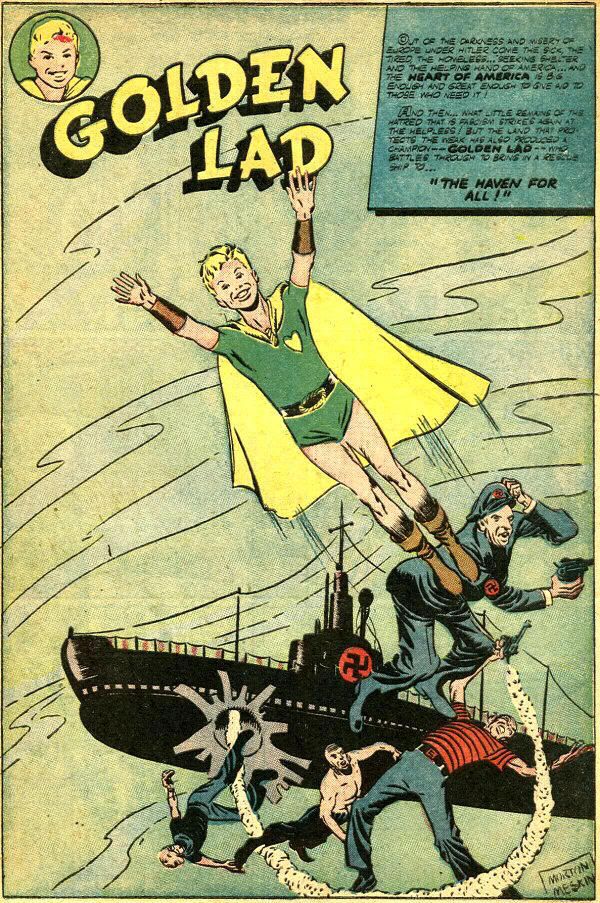
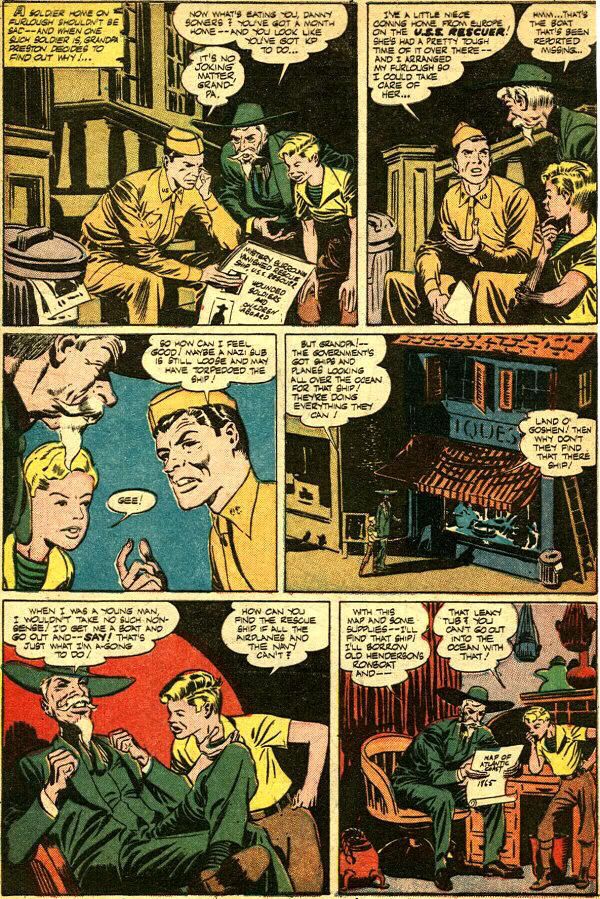
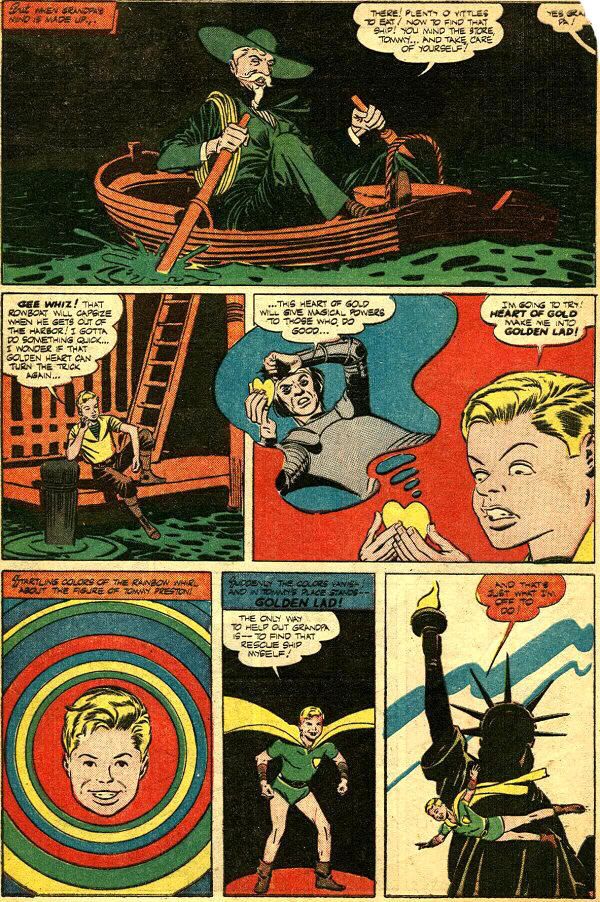
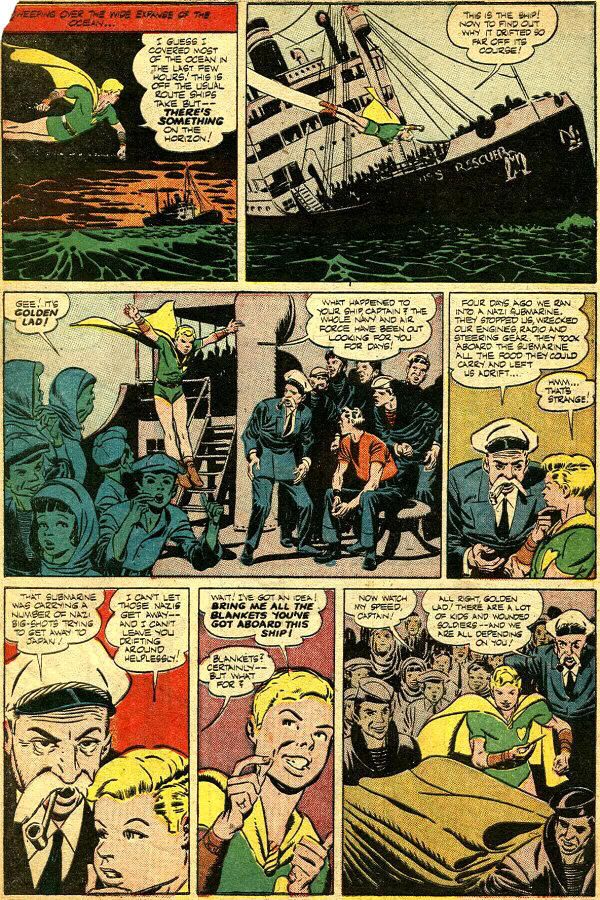
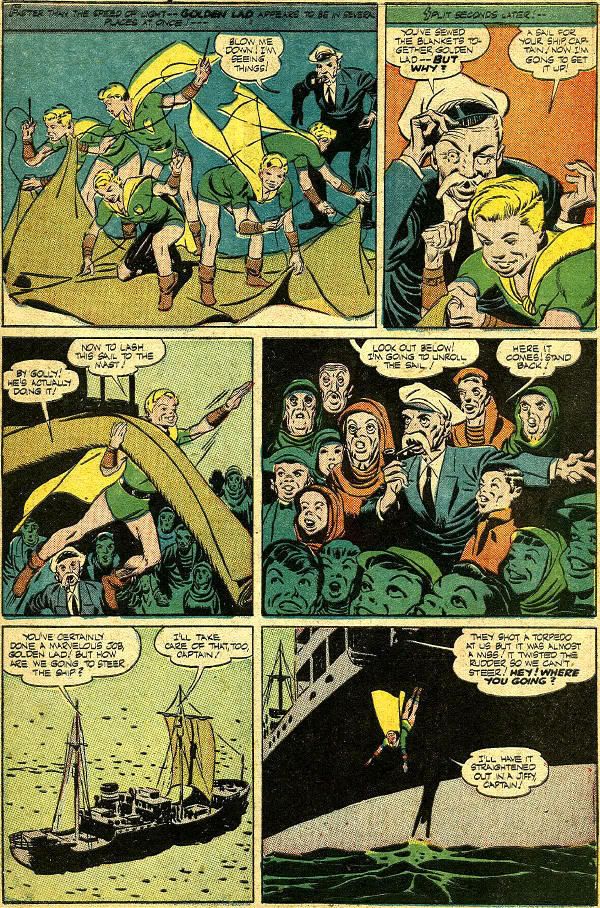
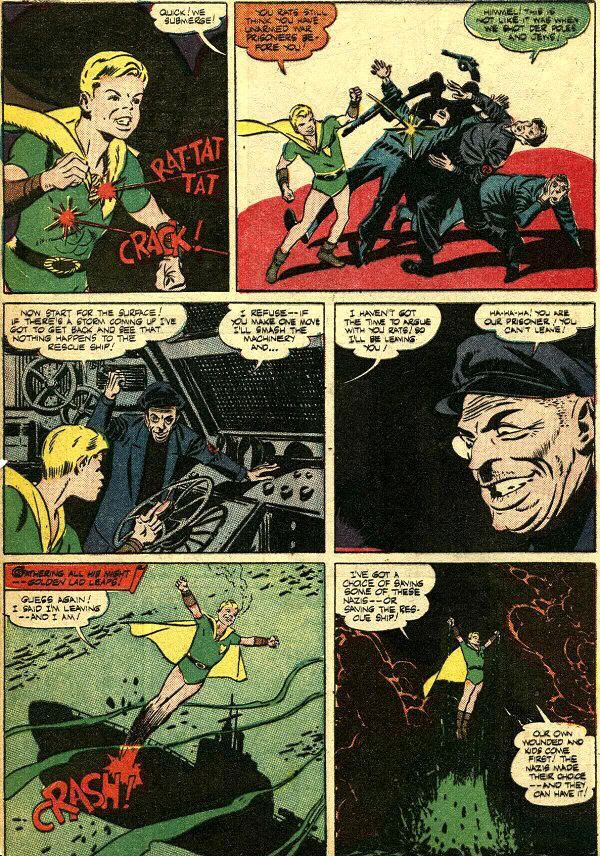
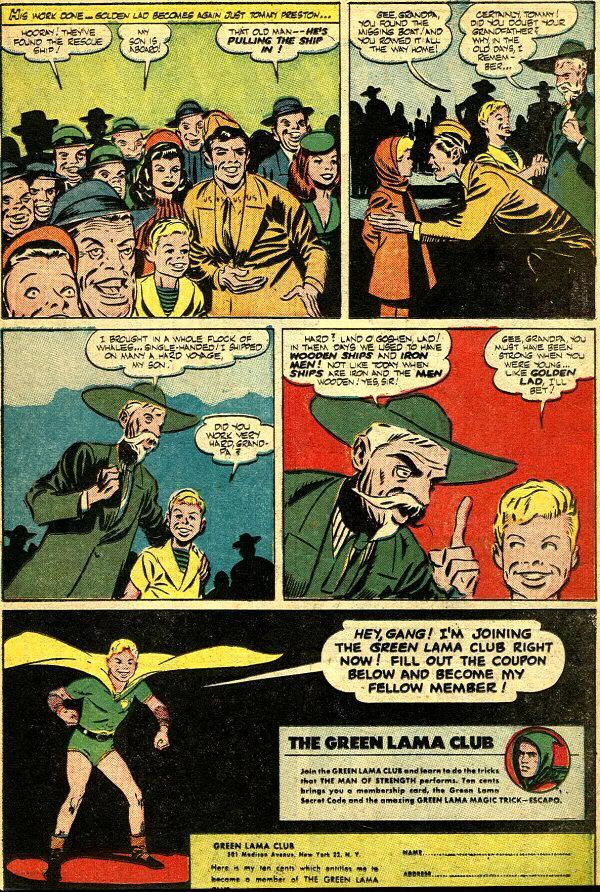
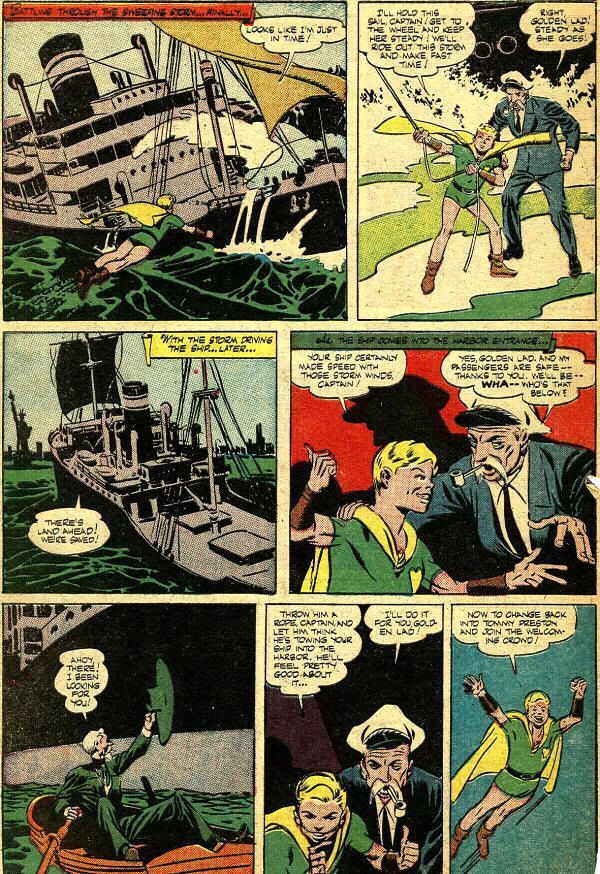
Golden Lad finds a haven for all


Here's a fine example of artist Mort Meskin at the top of his form on a Golden Lad story. Since I scanned this from tear sheets I don't know what issue it came from. Golden Lad only went five issues, so one of my astute readers will tell me which one it was. Grand Comics Database doesn't have the information on this particular story.

Mort Meskin is an artist who was prolific for decades and an inspiration to other artists, including a teenaged Joe Kubert.

Page 1 / Page 2 / Page 3 / Page 4 / Page 5 / Page 6 / Page 7 / Page 8


Number 322


How deep is death? How much salve do I have to sell to win a pony?


From Mystic #31, 1954, comes this tale of getting in over your head; getting wet without going near the water. Jack Katz drew it. He went on to do The First Kingdom for Bud Plant.

By coincidence, the back cover of this issue is an ad for White Cloverine Brand Salve*, which uses the underwater motif.

I hope the kids did better than the murdering husband in the Jack Katz story.


*Ads like these were all over the comics for many, many years. Tony Kornheiser tells a funny story about this salve and its marketing techniques. I was surprised to find out it's still being made, although not by the original company, and it's not being marketed the same way, either. It was a product just made for comic books and young entrepreneurs.


Number 321


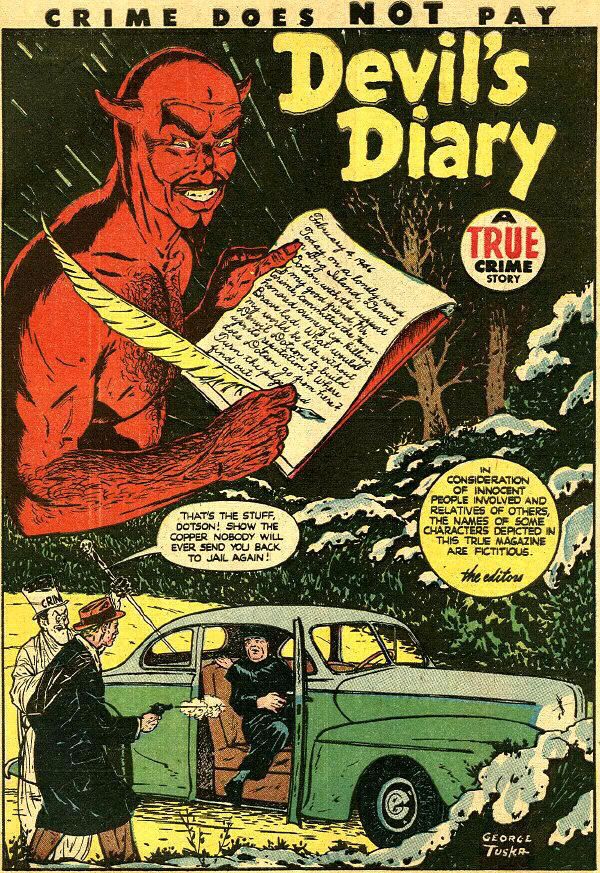
Devil's Diary


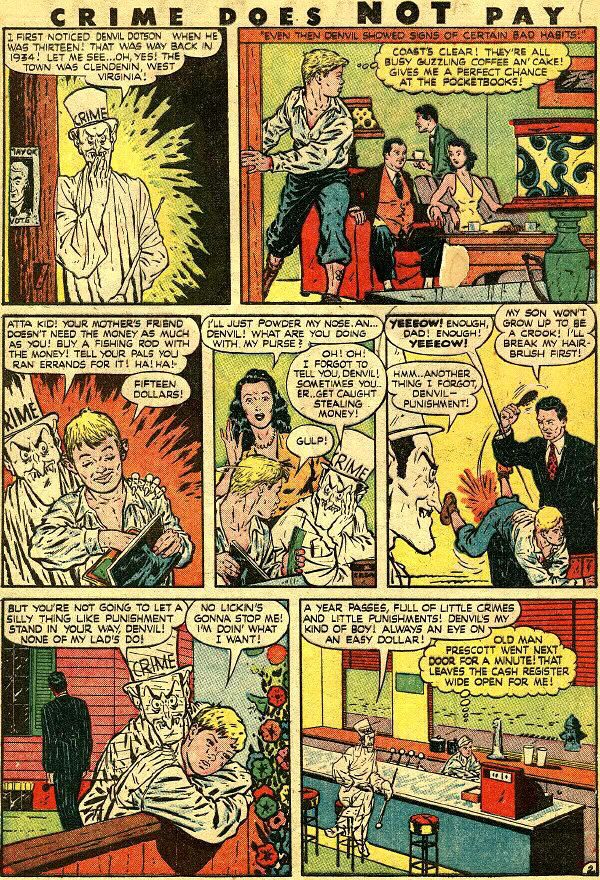
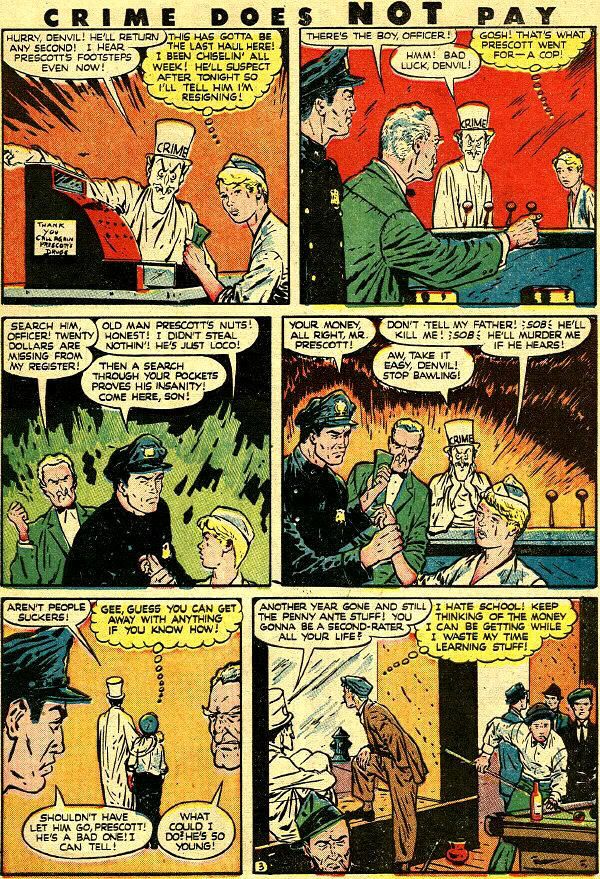
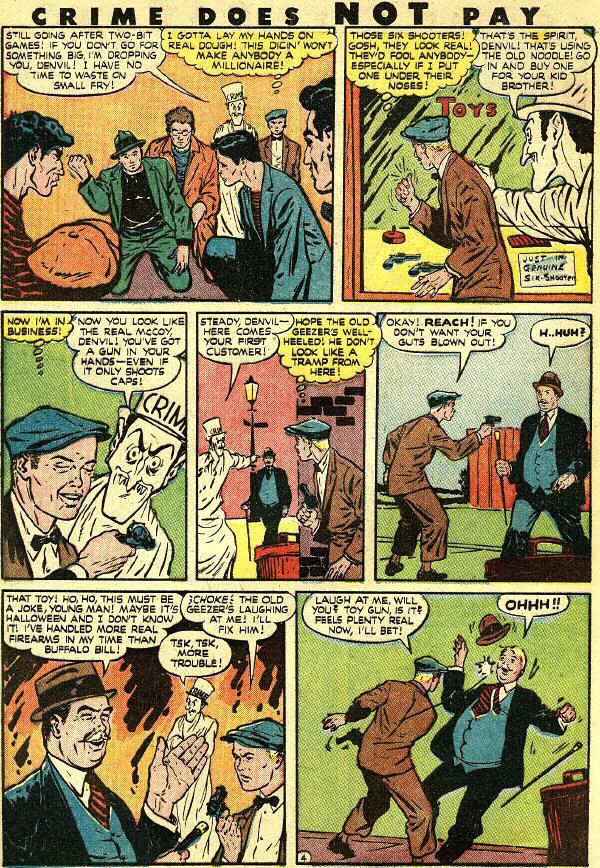
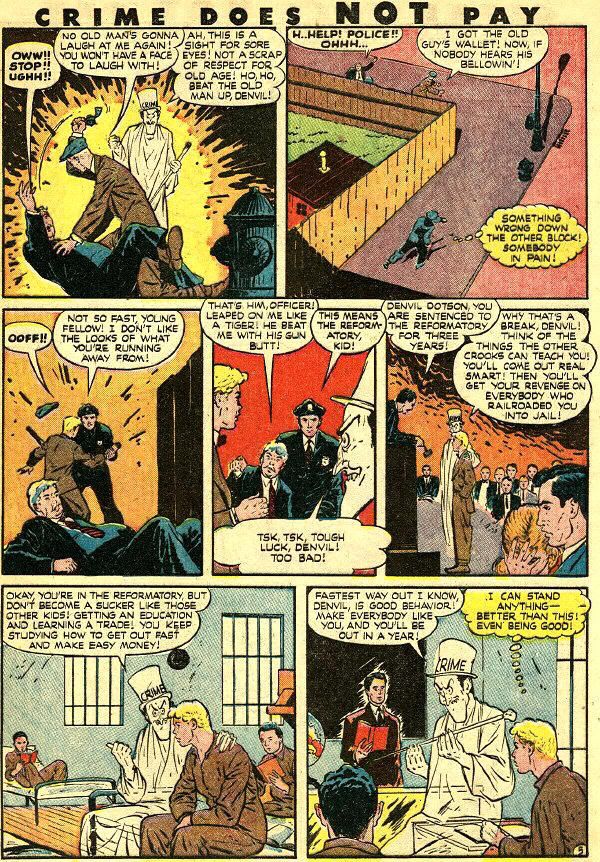
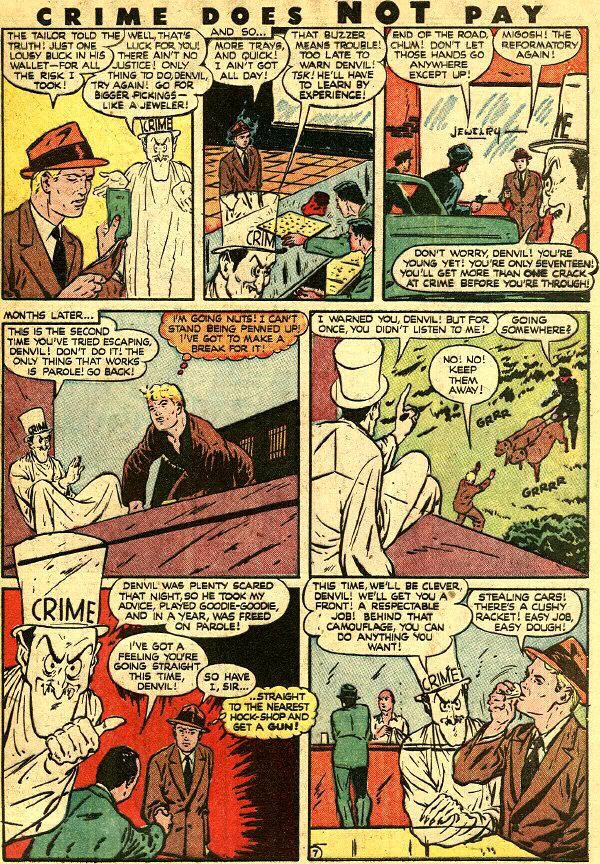
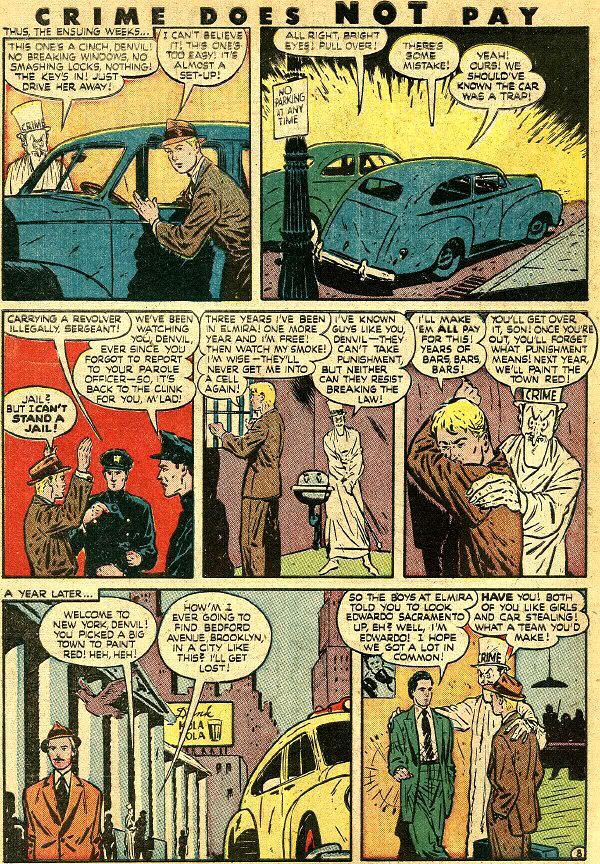
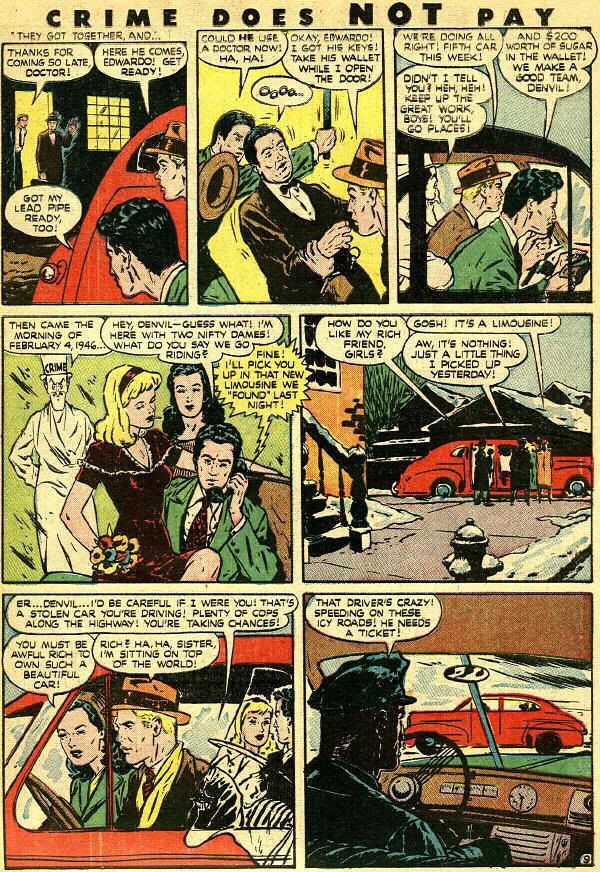
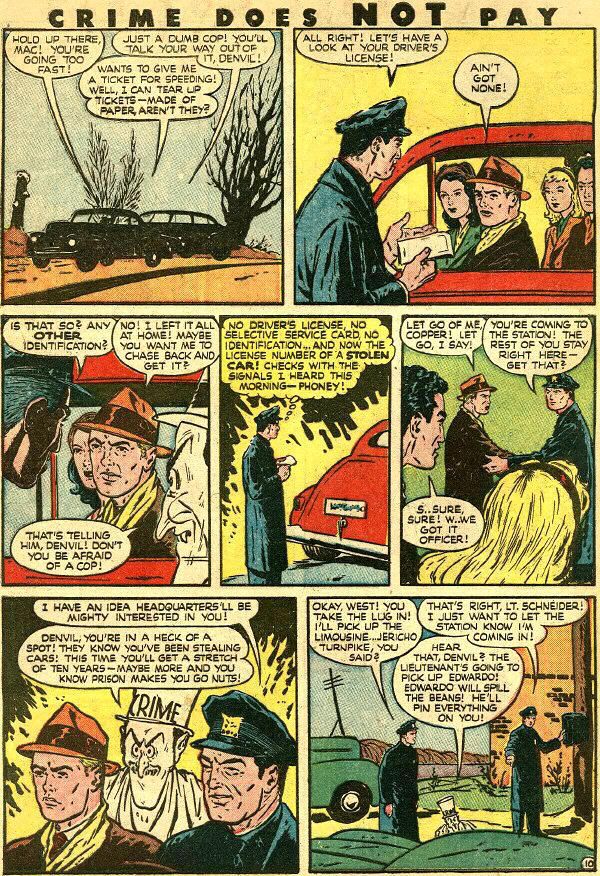
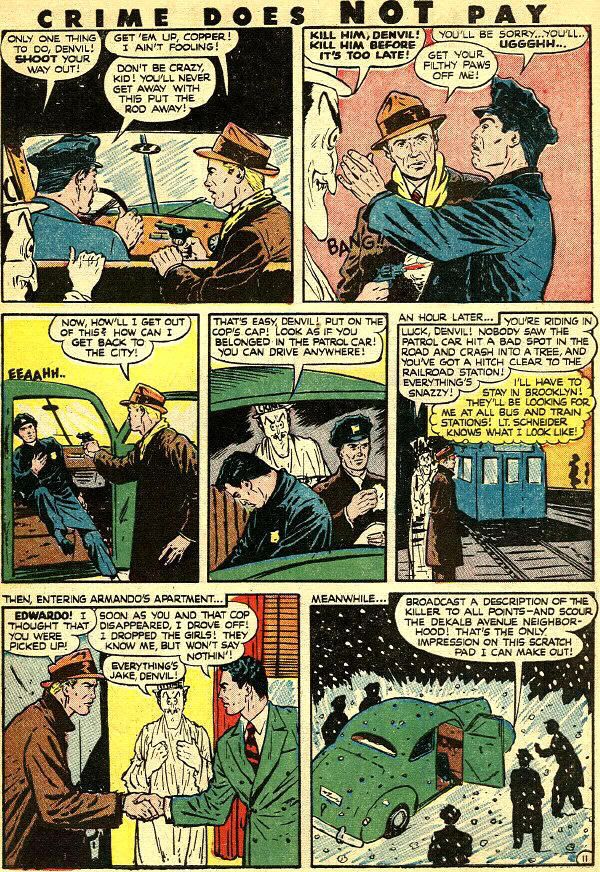
Charles Biro, who wrote this story, wanted you to make sure you understood the connection to that big red devil on the splash page from Crime Does Not Pay #49, January, 1947. So he named the main character "Denvil."

Before the horror comics of the 1950s finally pushed parents, legislators and Dr. Wertham over the edge, the main complaint about comics was with the crime comics. Lev Gleason's Crime Does Not Pay was the most popular. Wertham reserved particular antipathy to comics with the big word CRIME on the covers, seeing that word as a kid magnet. This story, "Devil's Diary," is a classic of the sort that Wertham was most bothered by, a record of a criminal career only wrapped up in the last couple of panels when the criminal is finally apprehended. To be fair to writer Biro, in this story Denvil is a stupid sociopath who doesn't learn from getting caught, and keeps making mistakes until it's too late. I guess there's a moral in there somewhere, but Wertham wasn't buying it. He thought what this type of story represented to its young readers is that crime is OK…until you get caught.

The artwork, some of the best I've seen by artist George Tuska, really serves this story. That goofy Mr. Crime--who was supposed to represent the dead end of crime--could have been excised without hurting the story at all.

Page 1 / Page 2 / Page 3 / Page 4 / Page 5 / Page 6 / Page 7 / Page 8 / Page 9 / Page 10 / Page 11 / Page 12

*******

Say What?!
Could you just describe it to me instead?


Number 320


Jungle Vengeance


How many white girls in tight-fitting animal-skin costumes were running around in the comic book jungle, anyway? Off hand I can think of Sheena, Rulah, Jann, Lorna, Judy, Tiger Girl, Shanna the She-Devil, Nyoka (who wore shorts) Jun-Gal…and Taanda, White Princess of the Jungle. I wonder if thosse jungle babes formed a coffee klatsch, got together in a hut somewhere once a week to swap stories of lions they'd killed, witch doctors they'd foiled, or white hunters they'd chased out of their jungles.

Well, whatever. Taanda appeared for a time in Avon Comics, drawn by Everett Raymond Kinstler, who went on to become a famous portraitist. This is from Skywald's 1971 Jungle Adventures #1, reprinted from White Princess Of The Jungle #2, from 1952.


Number 319


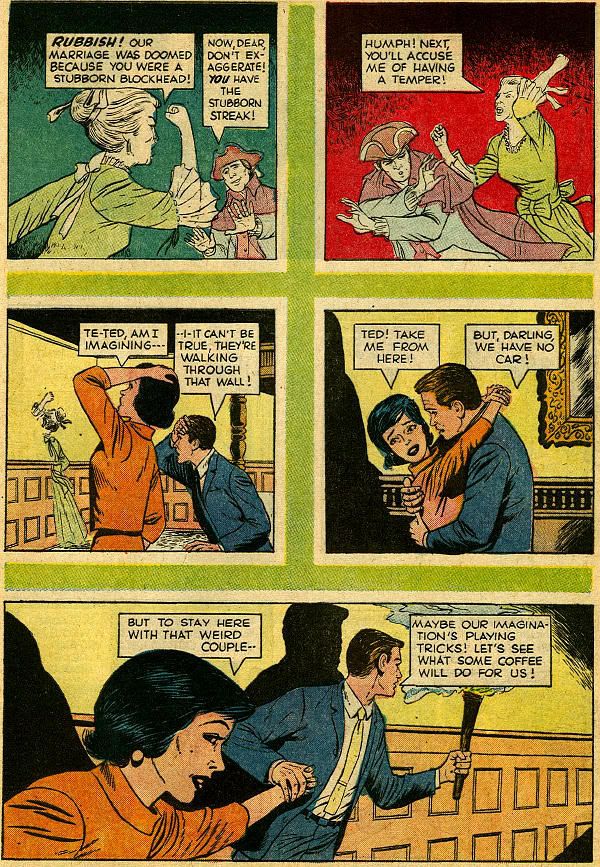
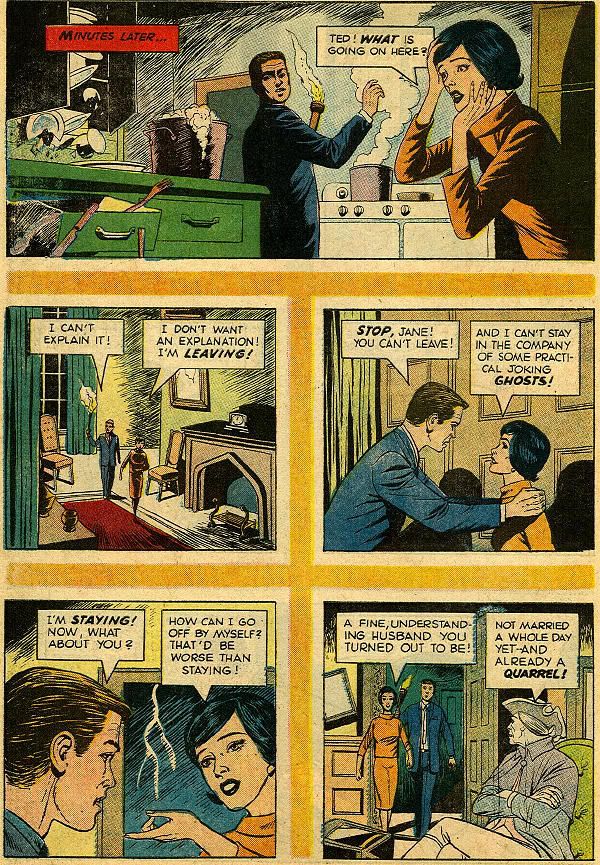
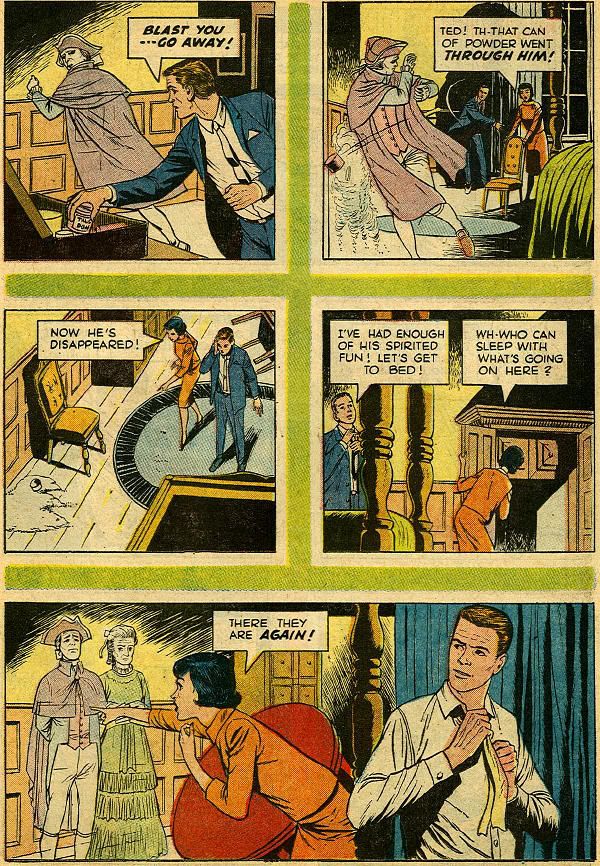
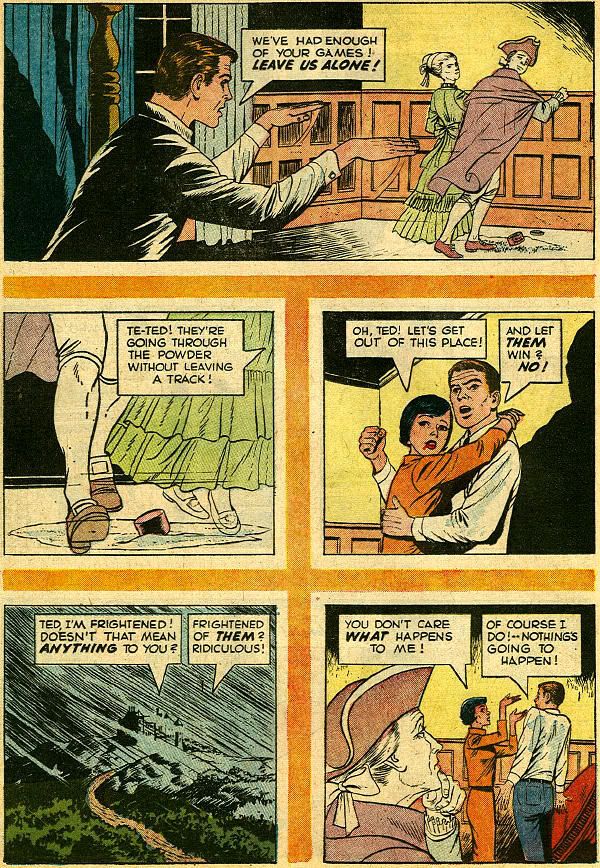
Tom Gill's Haunted Honeymoon


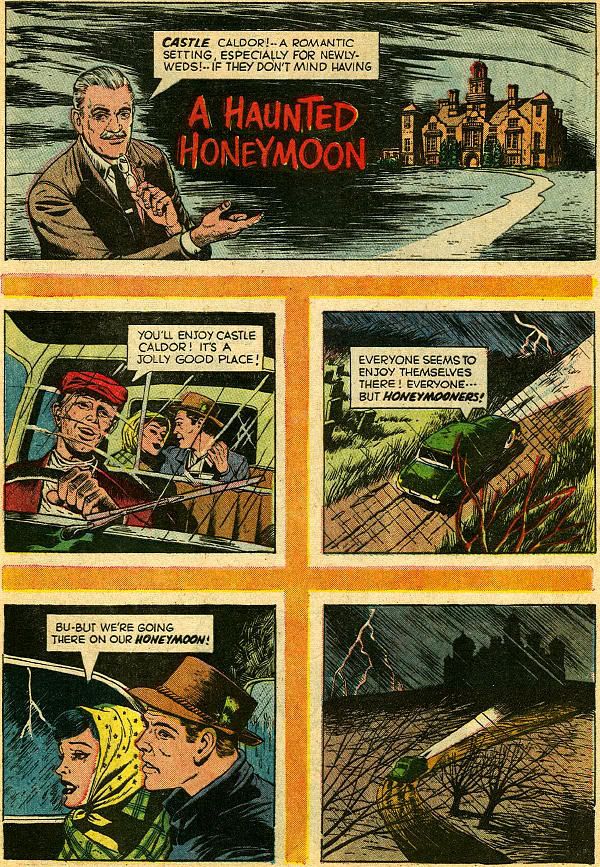
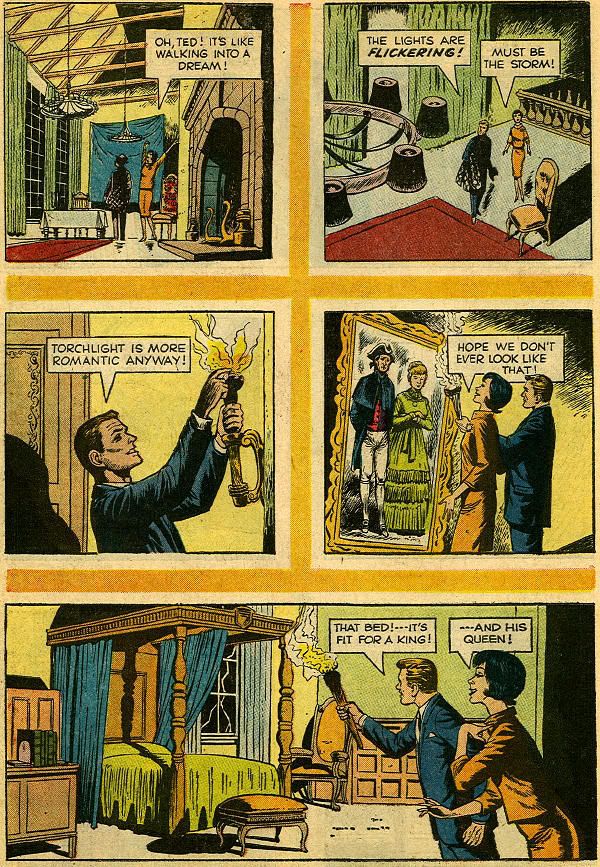
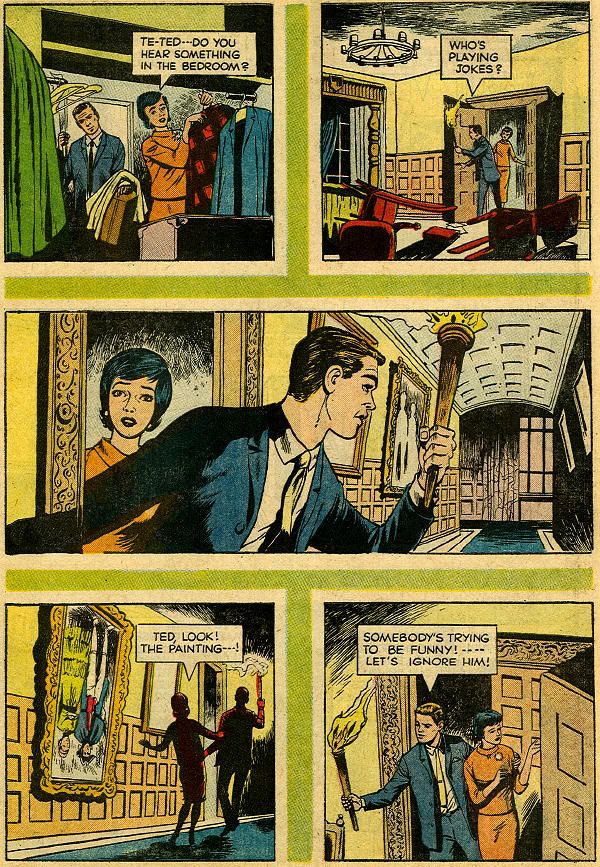
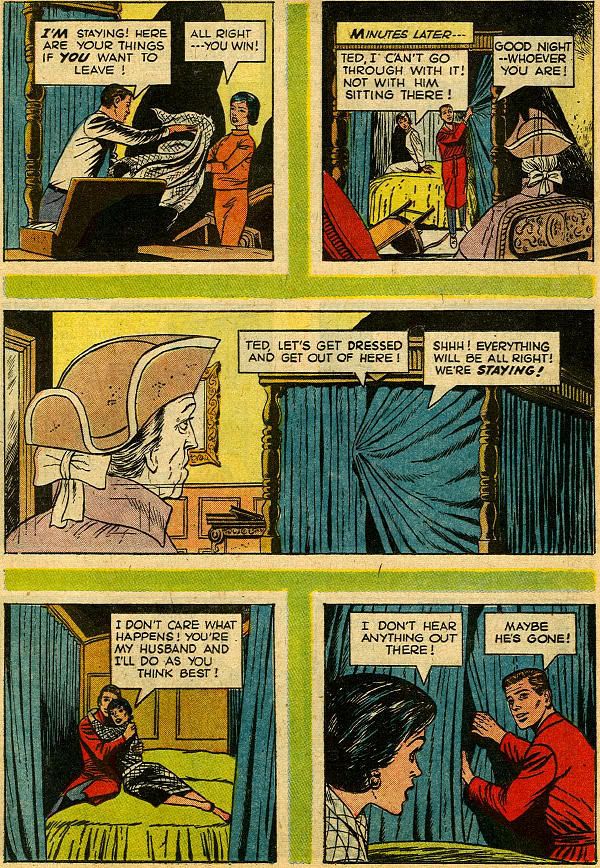
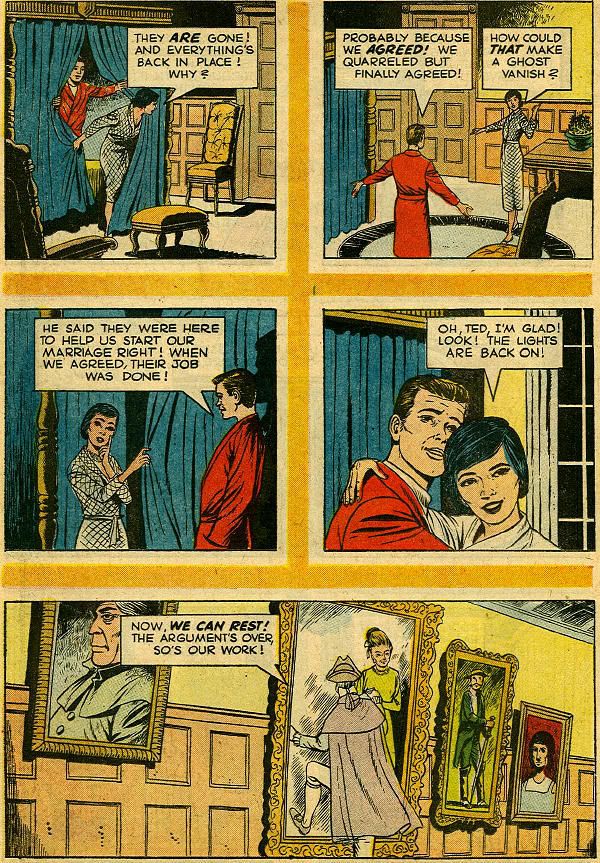
Tom Gill, who died in 2005 at age 92, was a longtime--very longtime--comic book artist. His chief claim to fame was drawing Dell's The Lone Ranger for over 20 years. He began drawing the series with issue #38, August 1951. Here is a two-page sequence from that issue, showing his strong sense of composition and solid drawing technique.


"Haunted Honeymoon,"* from Boris Karloff's Thriller #1, October 1962, showed he could draw something besides six-guns and horses. It's an enjoyable, lightweight fantasy about a newlywed couple getting advice from an older couple…who just happen to be dead. It was probably inspired by Thorne Smith's Topper. Jokes about wedding night stiffs will be cheerfully ignored.


Page 1 / Page 2 / Page 3 / Page 4 / Page 5 / Page 6 / Page 7 / Page 8 / Page 9 / Page 10 / Page 11

*Yes, I'm aware this title was used for a movie with Gene Wilder and Gilda Radner.


Number 318


Who R U?


Two four-page stories by Joe Sinnott. Both titles begin with the word "Who," both appear to be cast with the same leading man (although he's wearing a Kirk Douglas chin-dimple in the second). The first, "Who Is Nokki?" was published in Journey Into Unknown Worlds #54, and "Who Steals My Brain" is from Mystic #51, both post-code Atlas Comics, dated a month apart: November and December 1956 respectively.

"Who Steals My Brain" is a sort of Atlas/Marvel signature story, where aliens come to earth to check us out and then decide not to invade because of some attribute of humans they don't understand or that scares them. It's a good thing all of those hundreds of alien races who did the reconnoitering before invasion and backed out didn't get together and join up to kick some Earth ass.

Good, effective art from Joe, who is one of my all-time favorites from the Atlas/Marvel gang.