Hiển thị các bài đăng có nhãn Guns Against Gangsters. Hiển thị tất cả bài đăng
When I first showed this story from Guns Against Gangsters #6 (1949) in 2006, I wrote the following about artist L. B. Cole:
L. B. Cole drew, by his estimation, nearly 1,500 covers in his career. He was a decent artist on these inside continuity pages, but it’s for his covers he’s famous. His ability to make eye-catching poster-like covers sold an awful lot of otherwise mediocre comic books. Except for his loving renditions of sexy Toni, I don’t think there’s much else about this artwork that would send anyone’s pulse racing. But then, maybe that was enough for those readers in 1949 looking for a little something extra for their dime.
“Toni” is Toni Gayle, the lead character for Guns Against Gangsters. Toni is a pin-up in the Bettie Page style. She is so stylish she can swim underwater and come up with dry hair.

And as for the cover, despite, or maybe because of, the silliness of fashion model Toni in high heels fighting a shark, I think it is one of the great covers of the Golden Age.


Number 631


Toni Gayle and Big Bertha get down


What have we got in this story from Guns Against Gangsters Volume 2 Number 1, 1949? We've got art by L.B. Cole, we've got model Toni Gayle with her Bettie Page hairdo and sexy high heels, and we've got Big Bertha and Toni in a chick fight!

I don't know what else you guys want, and it's all for free, courtesy of Pappy's Prurient Interest Blogzine.

More about Toni here and here.


Number 304


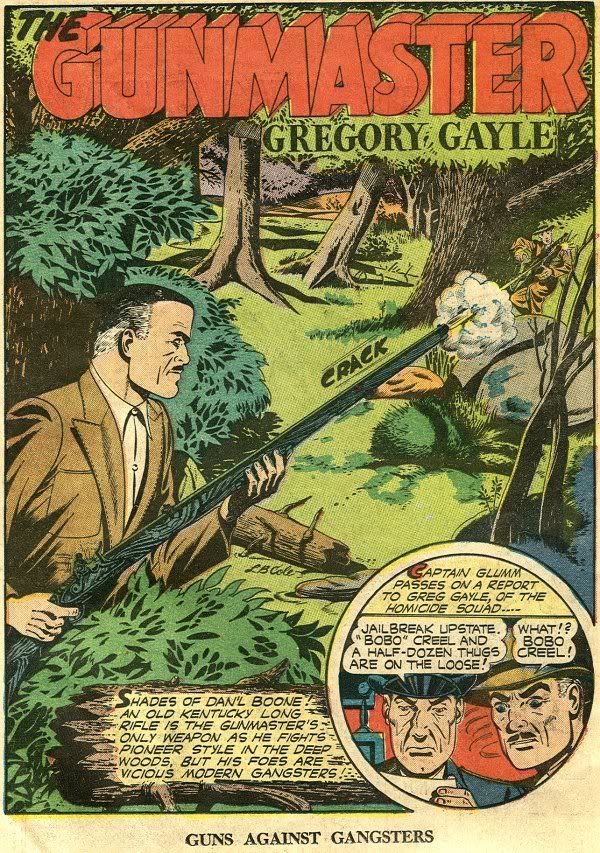
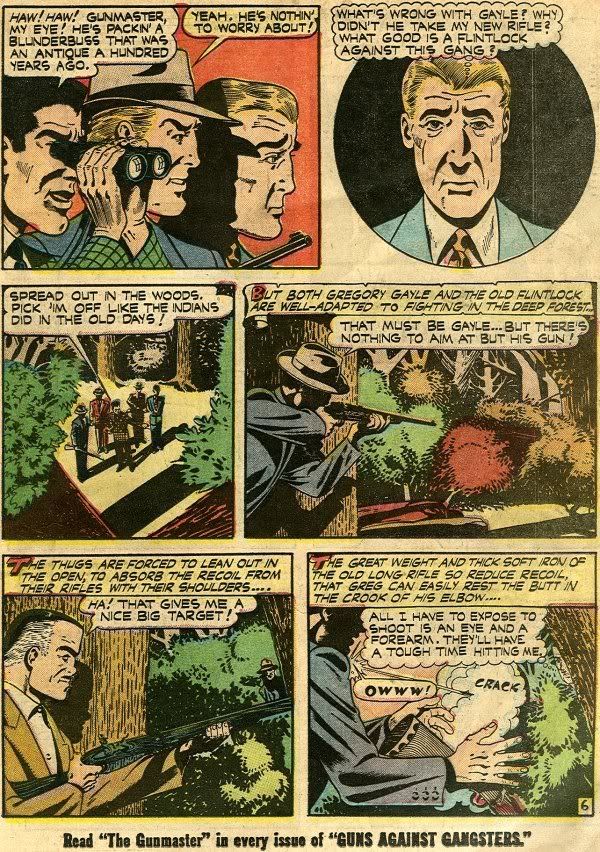
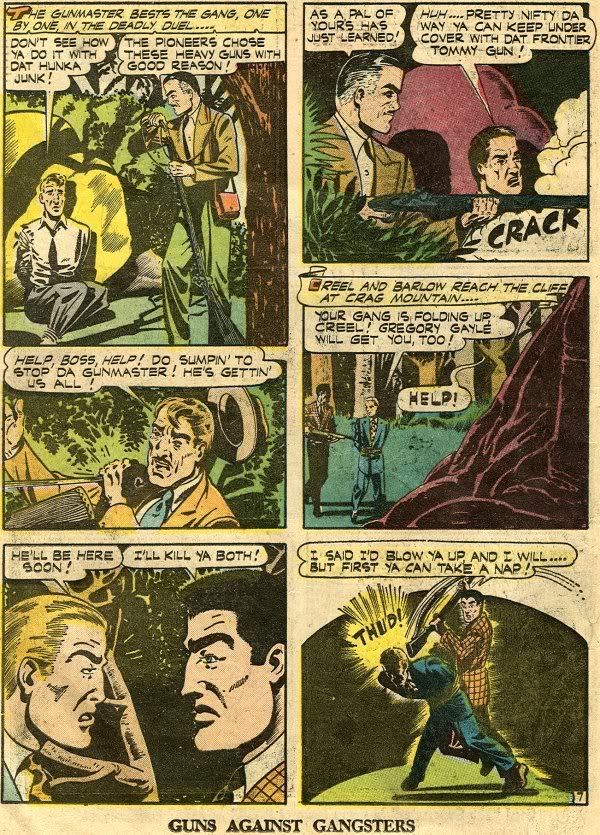
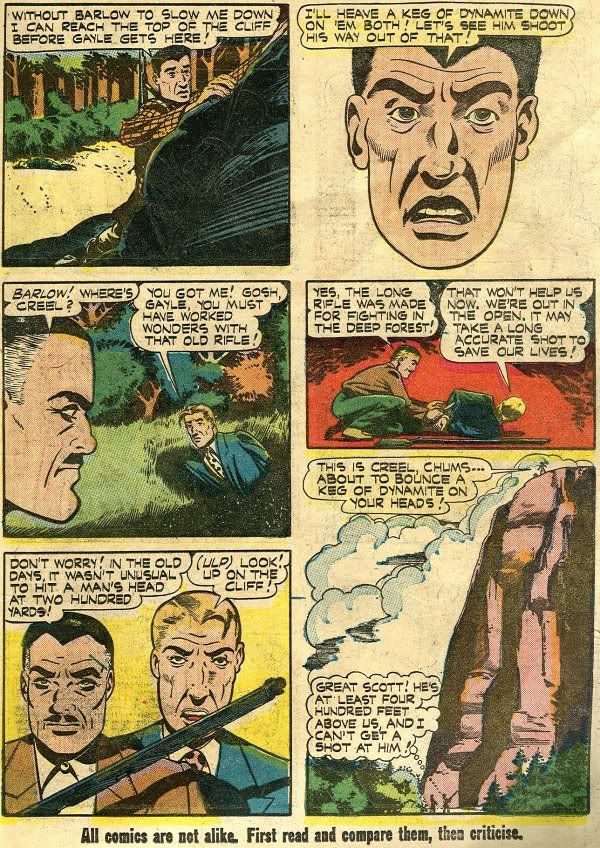
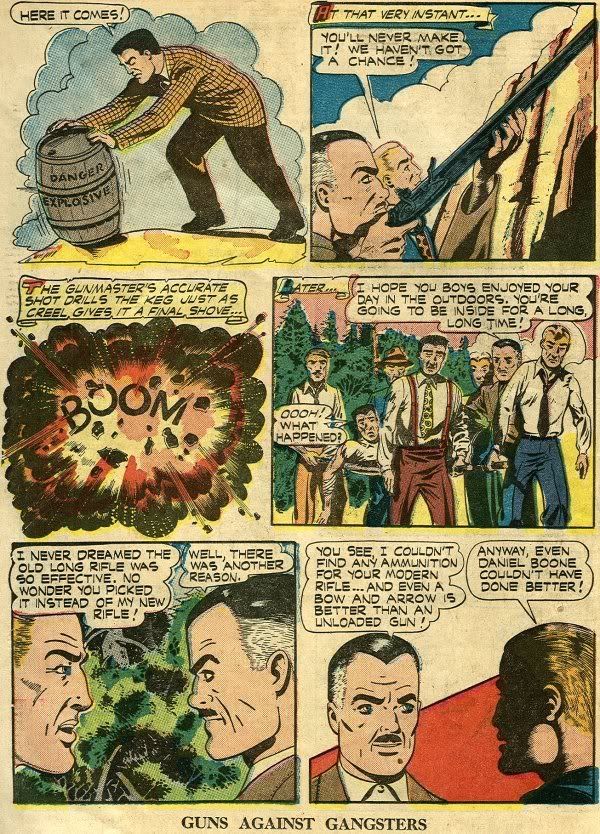
The Gunmaster


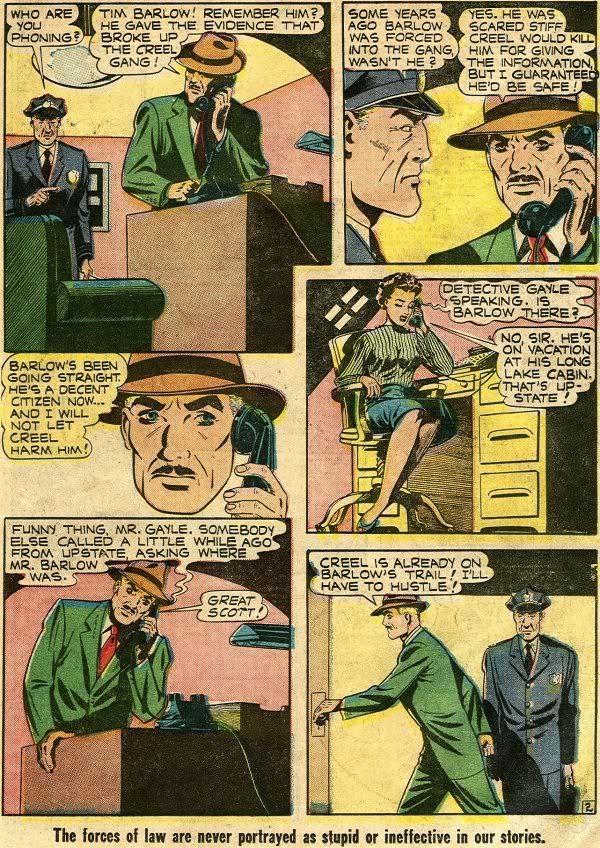
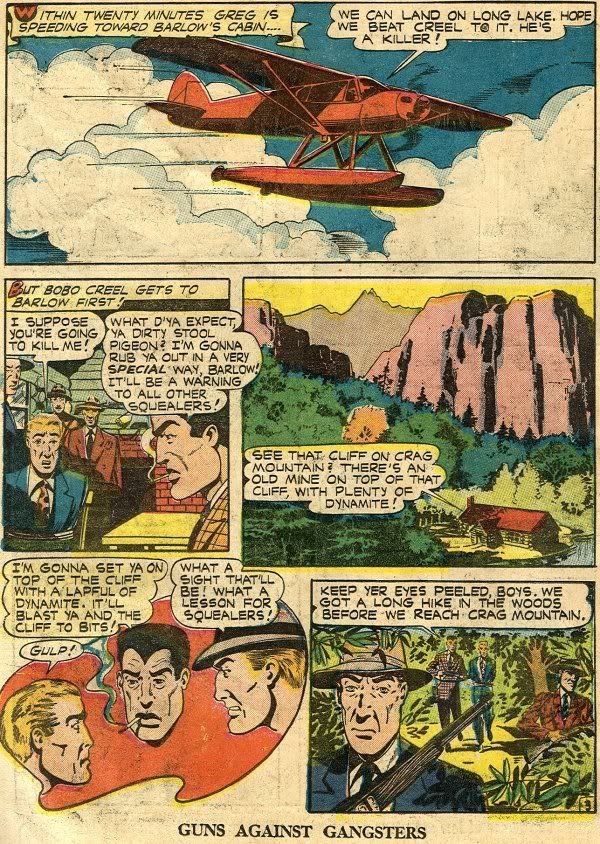
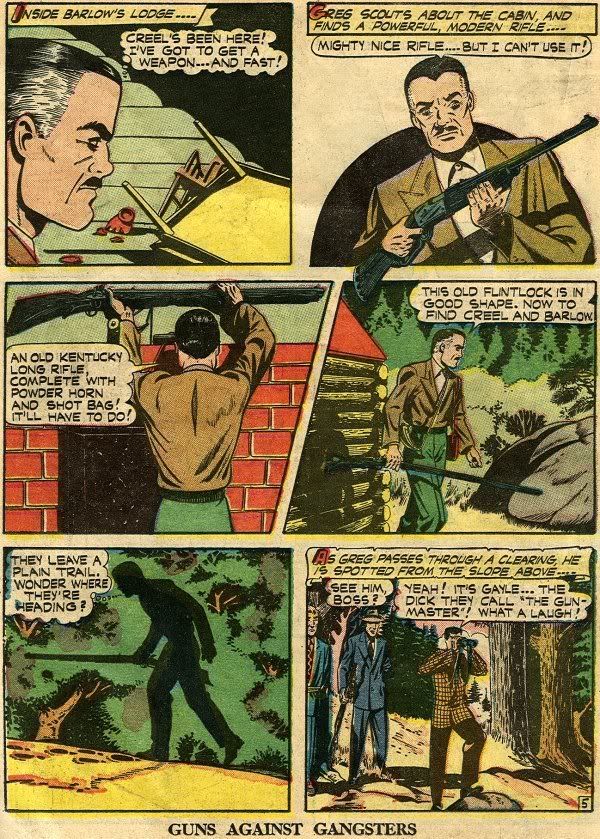
Gregory Gayle is Toni Gayle's dad. Who's Toni Gayle? She's the sexy chick with Bettie Pageboy hair who is the main character of Guns Against Gangsters. I showed her story from this issue, #6, July-August 1949, in Pappy's #22. Guns Against Gangsters, or GAG for short, is a crime comic book, but not like the type that we usually think of, the Charles Biro-edited books like Crime Does Not Pay, or Crime and Punishment. GAG had regular characters, and attempted to deflect the flood of criticism of crime comics that was following in the tidal wave of their success.

Gregory Gayle was kind of an early NRA spokesperson. He liked guns and was an expert as he shows in this story, taking out the crooks with an antique Kentucky long rifle. L. B. Cole, who drew the story, and maybe wrote it too, was reputedly an outdoor type of guy who liked fishing and hunting. There was probably some of L. B. in Gregory.

When you read the bottom of page 8, you see the line, "All comics are not alike. First read and compare them, then criticise." Some of the readers took them up on that. They could earn a buck for getting their letter published. This letter by a soldier shows both that GAG published critiques of itself, and also how the language and meanings have changed: "[The cover] should be more gay, with more action," read a lot differently 59 years ago than it does today.


Page 1 / Page 2 / Page 3 / Page 4 / Page 5 / Page 6 / Page 7 / Page 8 / Page 9