Number 309


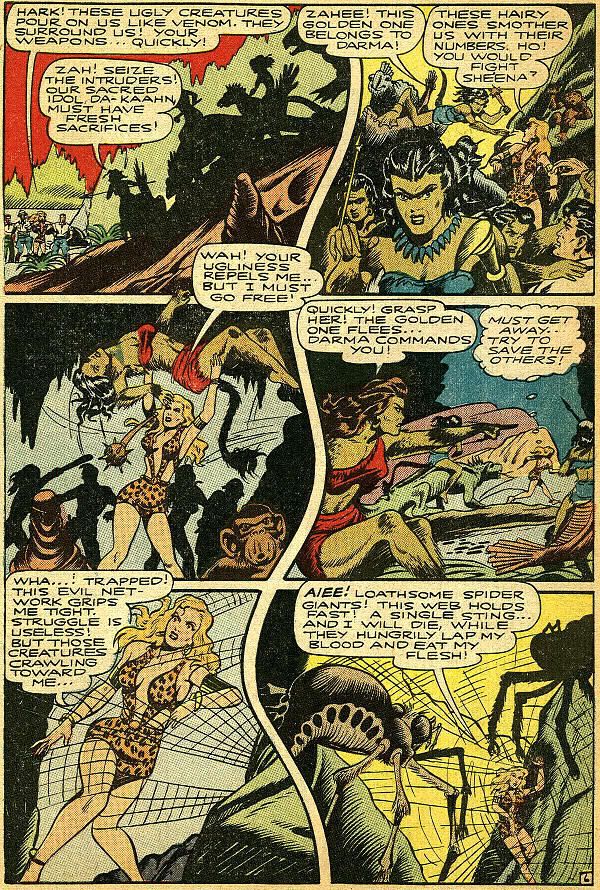
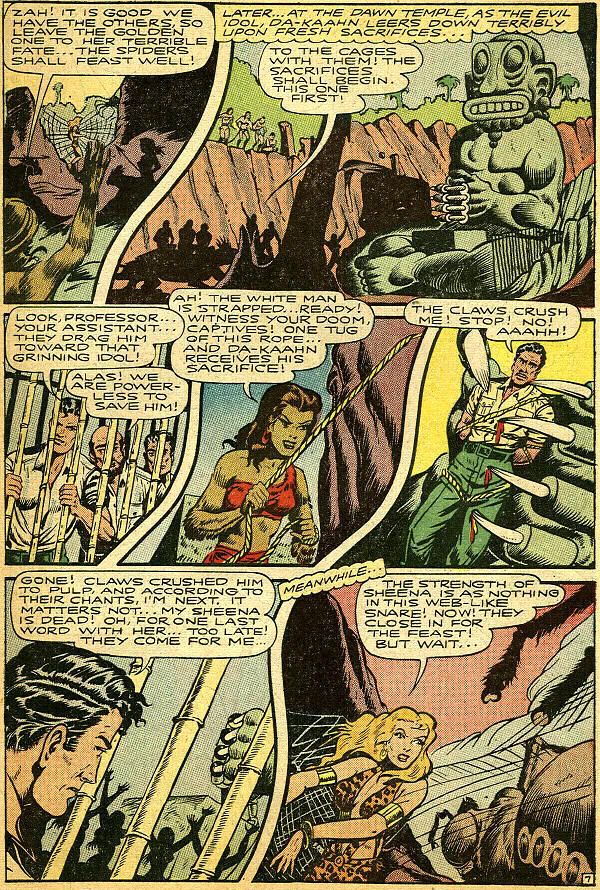
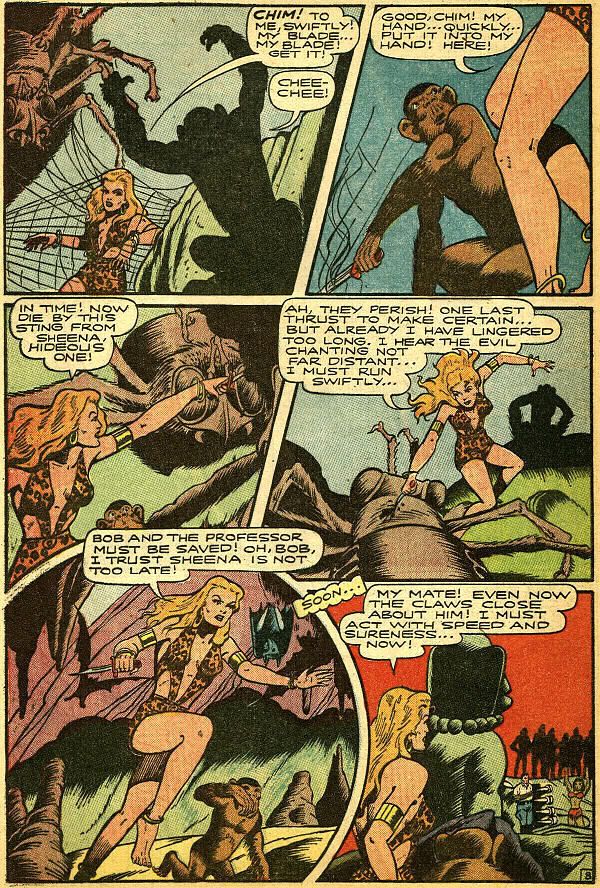
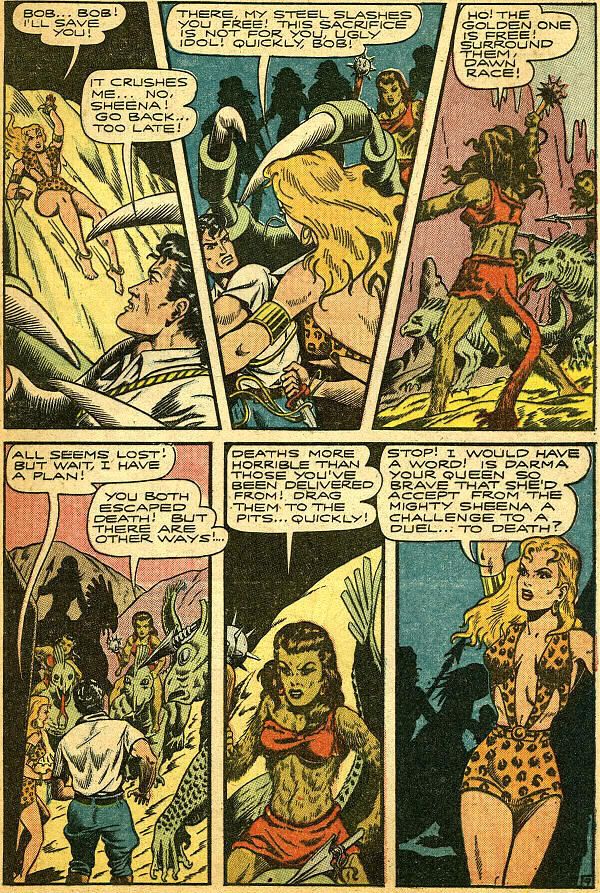
"...hungrily lap my blood…"


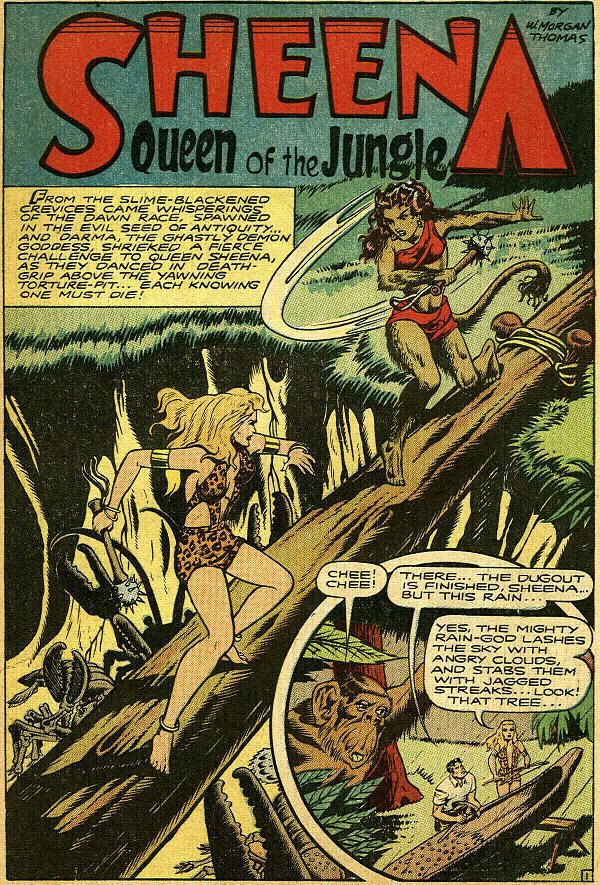
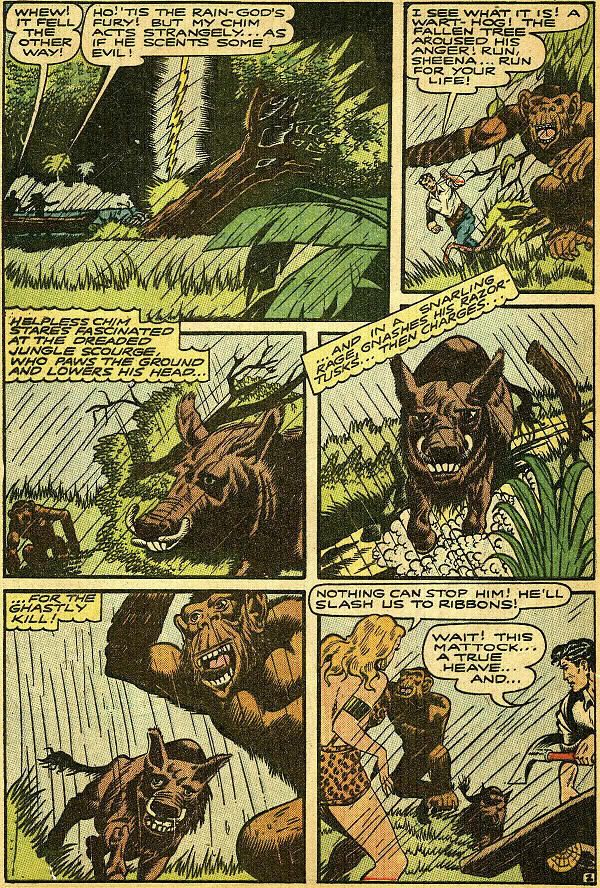
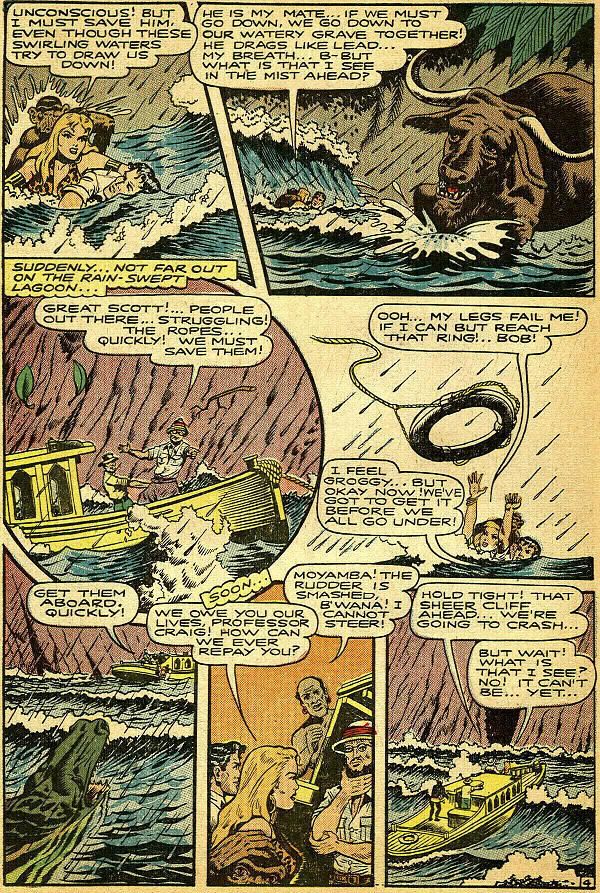
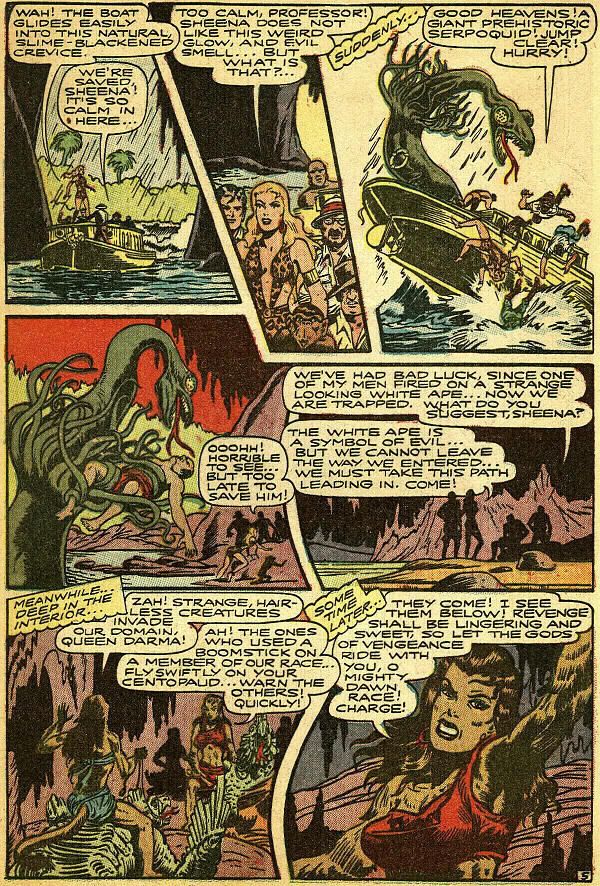
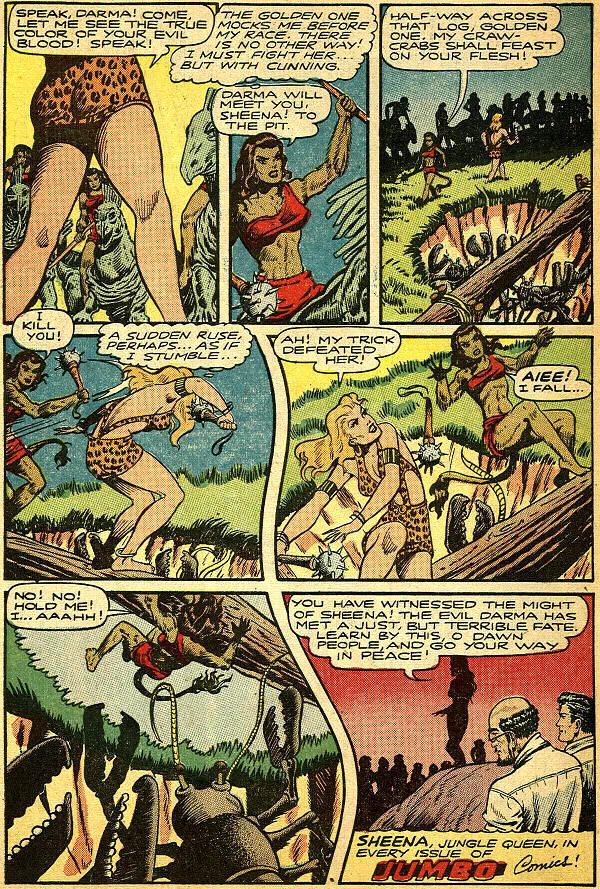
The writing in this Sheena story from Jumbo Comics #93, November 1946, is a really good example of purple prose. Deep purple! The artwork is by Robert Webb, a workhorse for the Jerry Iger shop.

Queen Darma of the Dawn Race (and that's what they call themselves, apparently realizing they're not evolved) looks like she could use a 55-gallon drum of hair remover.

It's very silly, but great fun from Fiction House.

Page 1 / Page 2 / Page 3 / Page 4 / Page 5 / Page 6 / Page 7 / Page 8 / Page 9 / Page 10


Number 308


The Filler Brush Man


I wonder if anyone has ever counted how many individual DC Comics cartoonist Henry Boltinoff appeared in. When I was a kid in the 1950s reading DC he was in every single issue I read. For years he was the filler artist for DC. Boltinoff, who died in 2001, sold me some of his original art years ago. There was an ad in Comics Buyers' Guide from Mr. Boltinoff, three pages for $25! A real bargain. He sent me a couple of full-pagers, and a "Cap's Hobby Shop" entry, all from 1960s comics.

Studying Henry's original artwork showed me he was a meticulous craftsman. Nearly every neatly brushed line is worked over in white paint to make sure it looked as smooth as possible. He probably didn't need to spend that much time on it, but he did. He was a true professional in every sense.

If there's anything else I can say about these examples from my 1940s Batman issues, it's that the gags themselves aren't laugh-out-loud funny, but more like mildly amusing. His work is very appealing, though, and someone thought it was funny because he made many sales of single panel cartoons to prestige publications like Saturday Evening Post. He also did syndicated panels in newspapers for years.

The example on the top of this page is from Batman #37.

Batman #53:


Batman #54:


Batman #55:


Batman #56:


Batman
#57:


Batman
#58:


Number 307


Oona Goosepimple's Uncle Oaf


Of all the postings I've done for Pappy's the one with the most blogosphere buzz, resulting in links to this blog, has been Pappy's #269, which featured the Oona Goosepimple story from Nancy #175. Who am I to go against the vox populi and what the public desires? Here's an Oona story from Nancy #170, September 1959.

As with the previous posting, it's written by John Stanley. Even if I didn't tell you, you'd know by the huge OW! when Nancy runs into the light pole.


Number 306


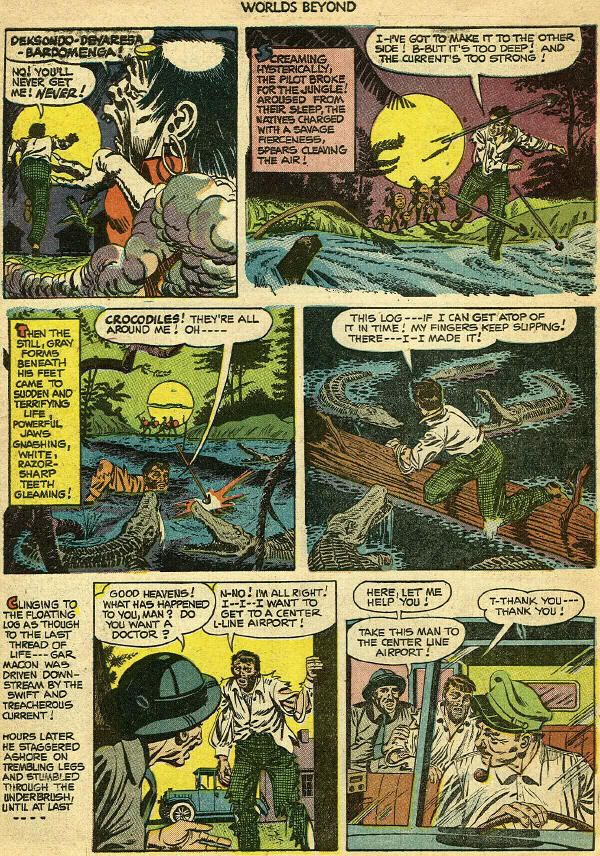
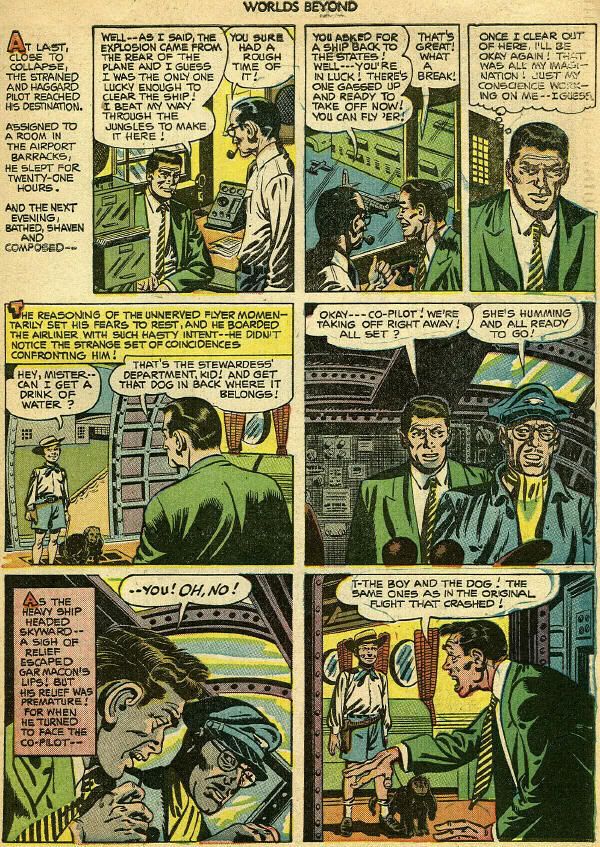
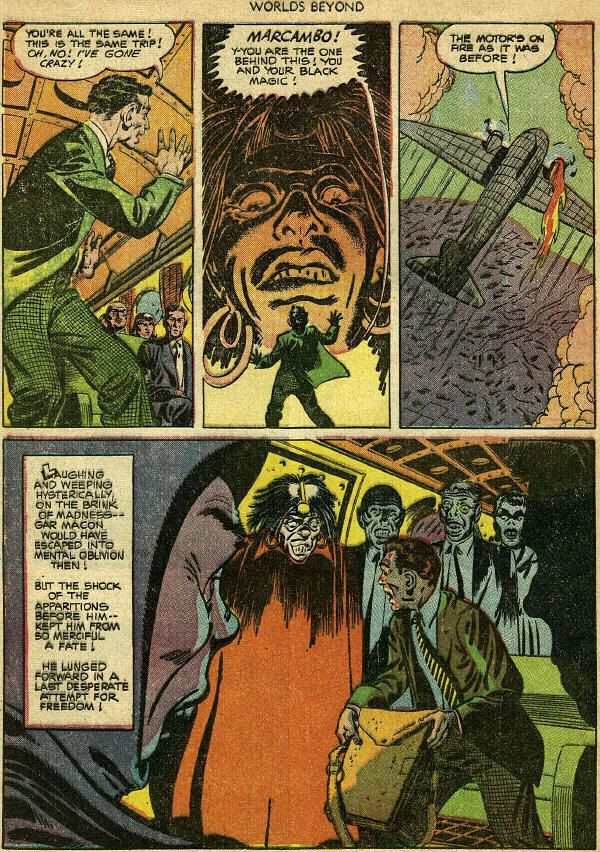
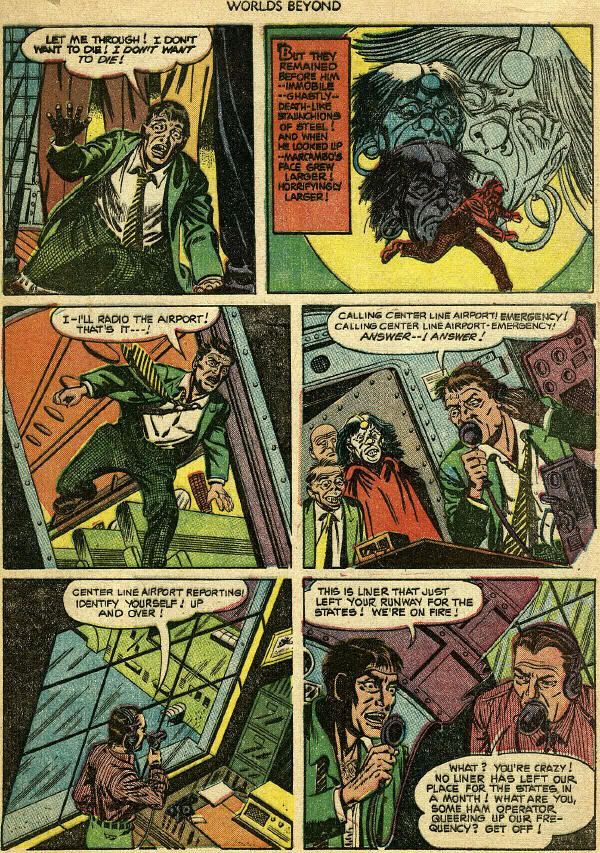
That ol' black magic has me in its spell…


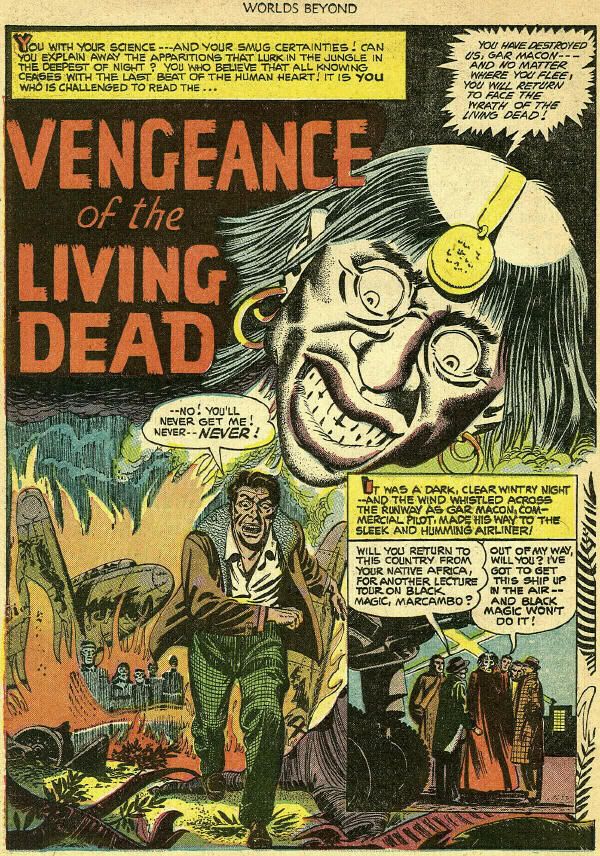
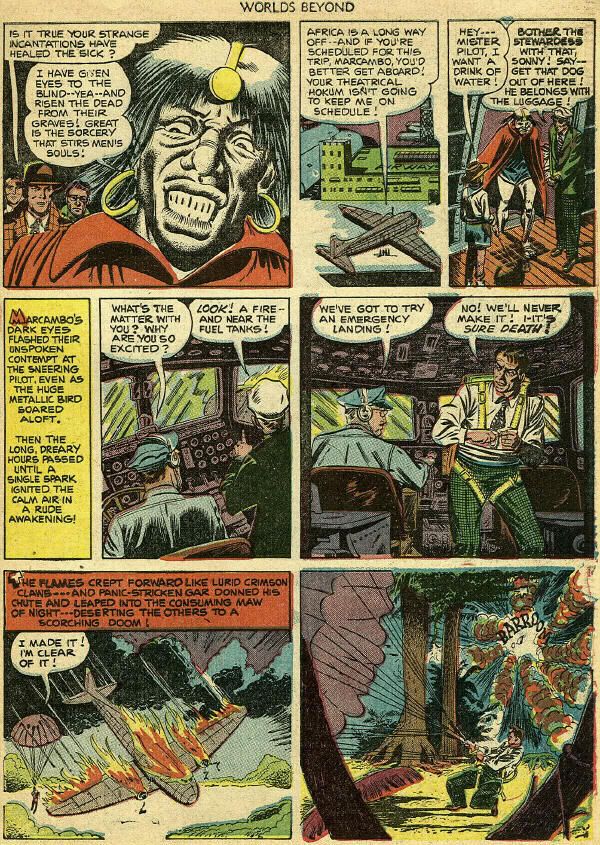
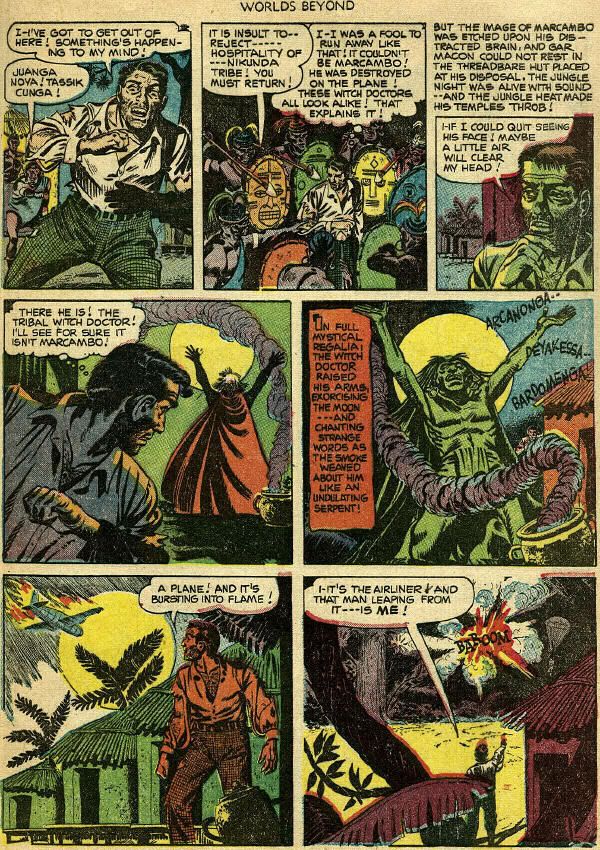
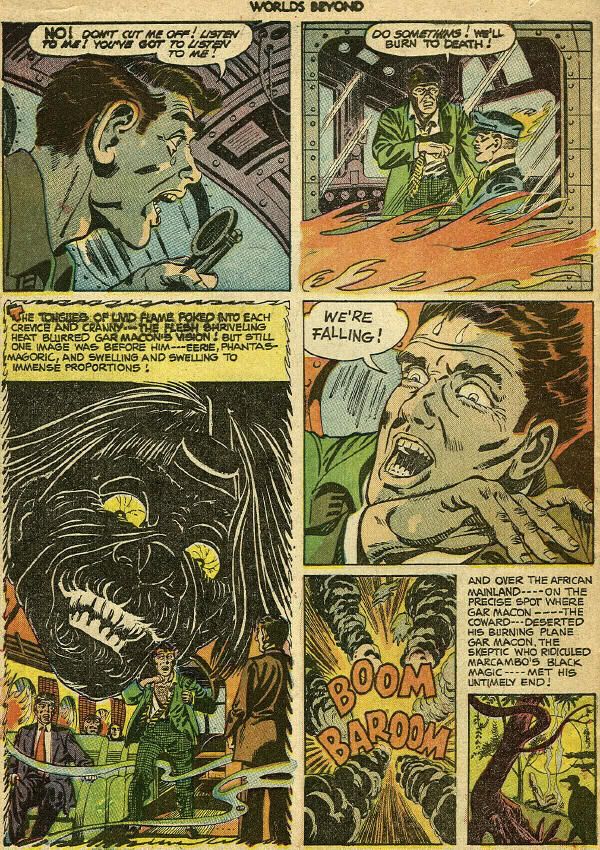
Poor Gar Macon, pilot, coward. He's doomed to repeat his mistakes. Most of us wish for a chance to go back and undo something we've screwed up, but in this case Macon gets to do it again until it undoes him. "Vengeance of the Living Dead" is from Fawcett's World's Beyond #1, 1951, the only issue of that title. It became Worlds of Fear with the next issue.

The artwork is by Bernard Baily, a fine golden age artist who contributed some of the best and most gruesome covers ever for horror comics. His abilities show in this effective and creepy story.

Speaking of doing things over, I'm going back to work today after having a week off. I get to do the same thing I've done every working day of my life for three decades. Having the week off gave me the ability to post to Pappy's every day. It was fun, but now I'll be going back to my usual three-a-week schedule.

Page 1 / Page 2 / Page 3 / Page 4 / Page 5 / Page 6 / Page 7 / Page 8 / Page 9


Number 305


Zoo Zoo Zsa Zsa


David Miller provided these scans from his copy of Ajax's Madhouse #1, June 1957. Thanks, Dave!

The story is a satire about Zsa Zsa Gabor, her two sisters and their mom, who were a band of Hungarian immigrants to the U.S., eager for publicity, fame and fortune. Just in case you haven't ever heard of Zsa Zsa, you can read about her here. Long before Paris Hilton was a celebrity with no discernible talent beyond standing in front of cameras, Zsa Zsa created the template by which no-talent people can be in magazines, newspapers and television. It's the trick of celebrity: she was famous for being famous. It's fitting for Paris Hilton to emulate her; they're related. One of Zsa Zsa's many marriages was to a Hilton.

The artwork in this story is by the Jerry Iger studio, and it's probably a reprint from the 1954 Madhouse series, also by Ajax. Whew. It gets tough keeping track of all of this. The references to Tooloose Latruck are to the 1952 John Huston movie bio of Toulouse-Lautrec, Moulin Rouge, starring José Ferrer, and featuring Zsa Zsa as Jane Avril.


Number 304


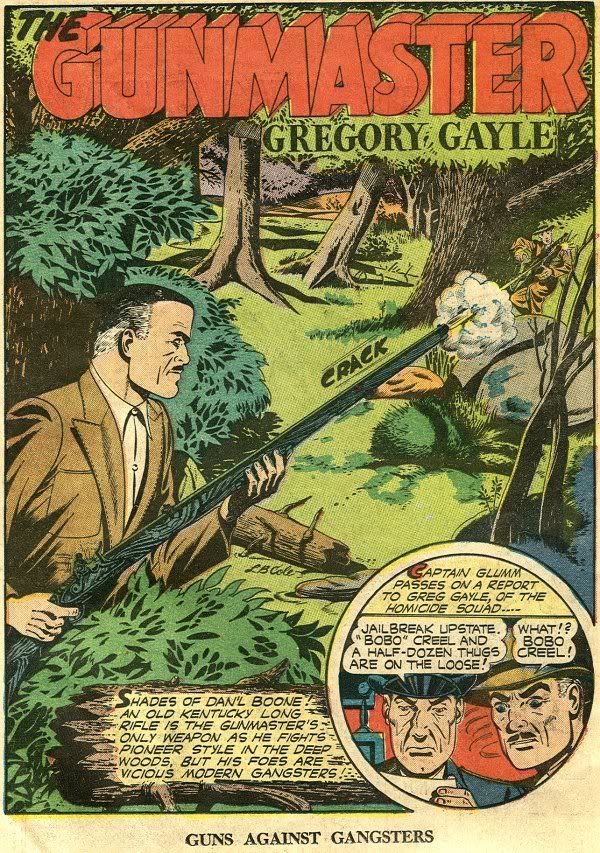
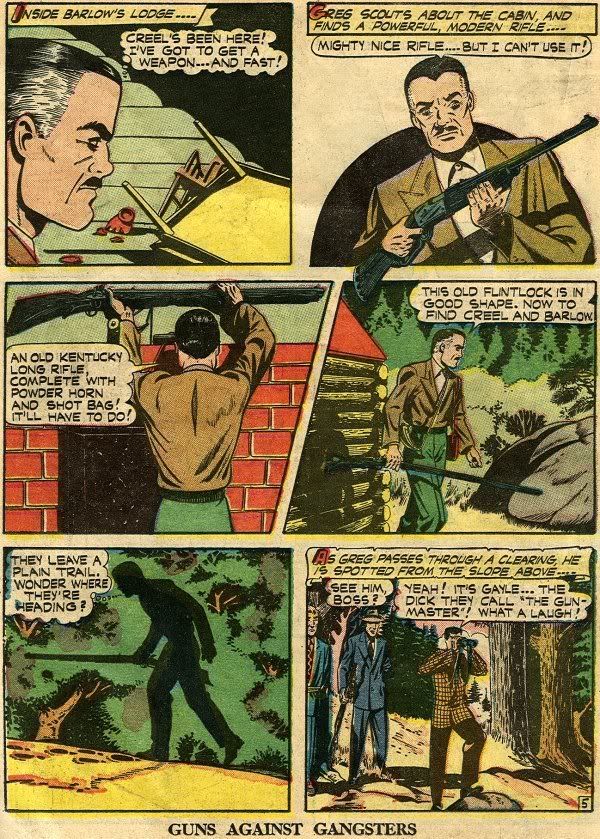
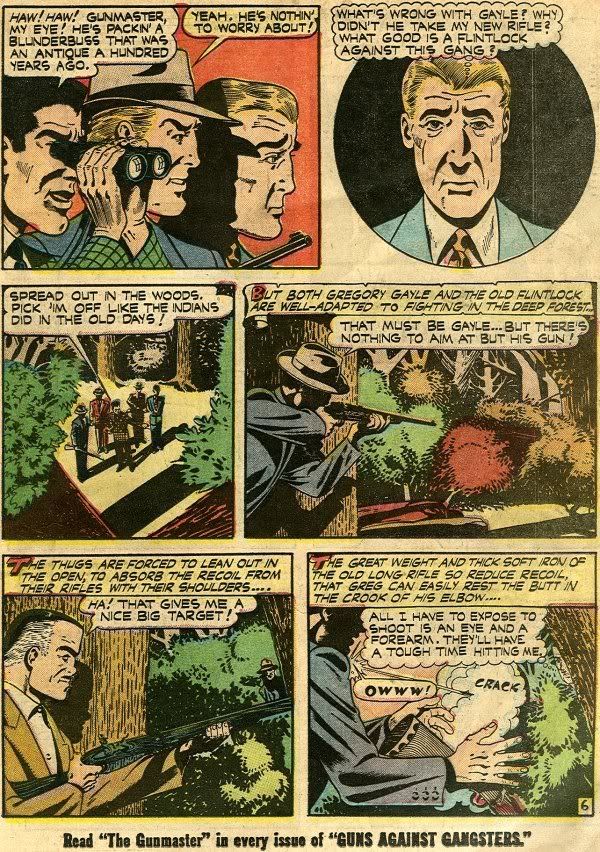
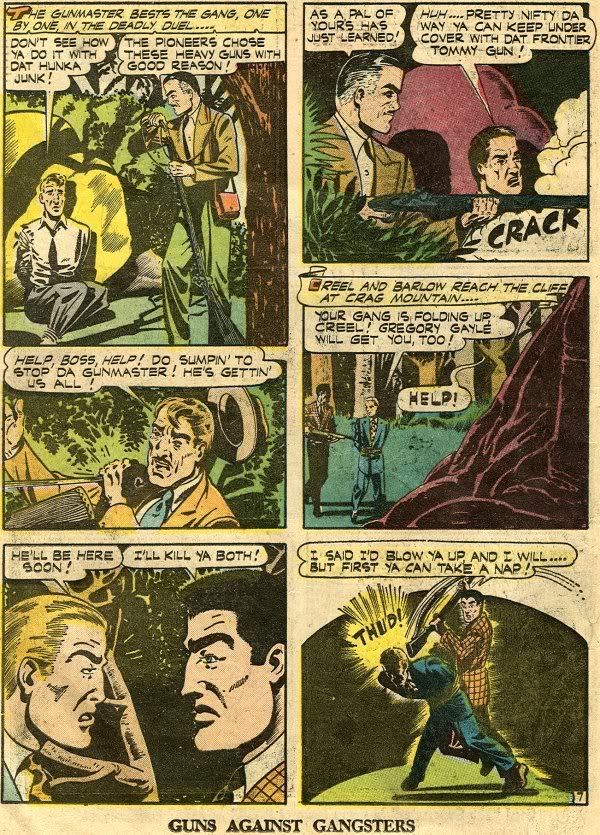
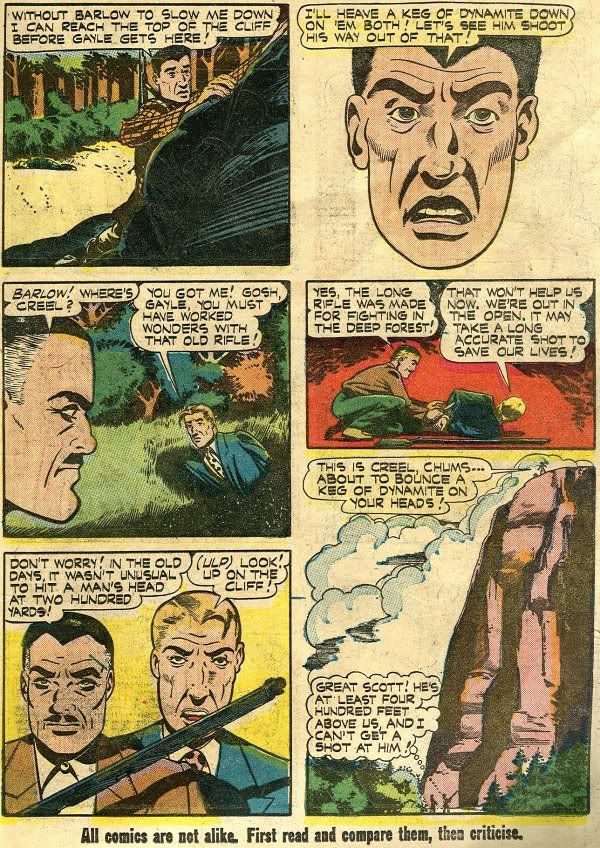
The Gunmaster


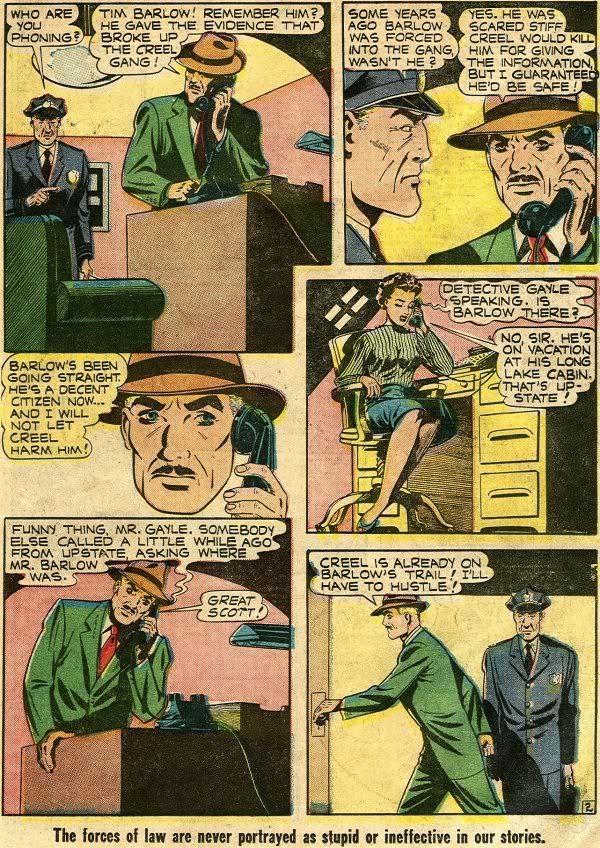
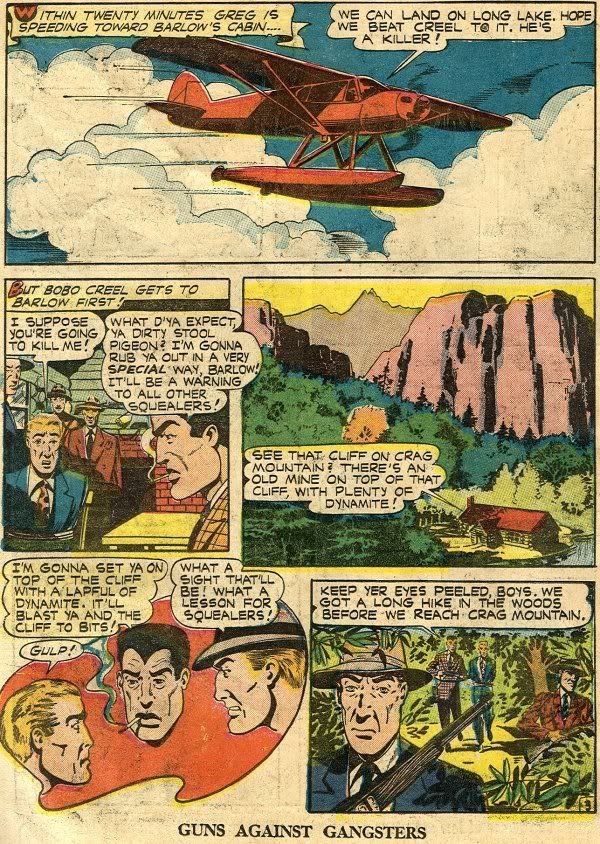
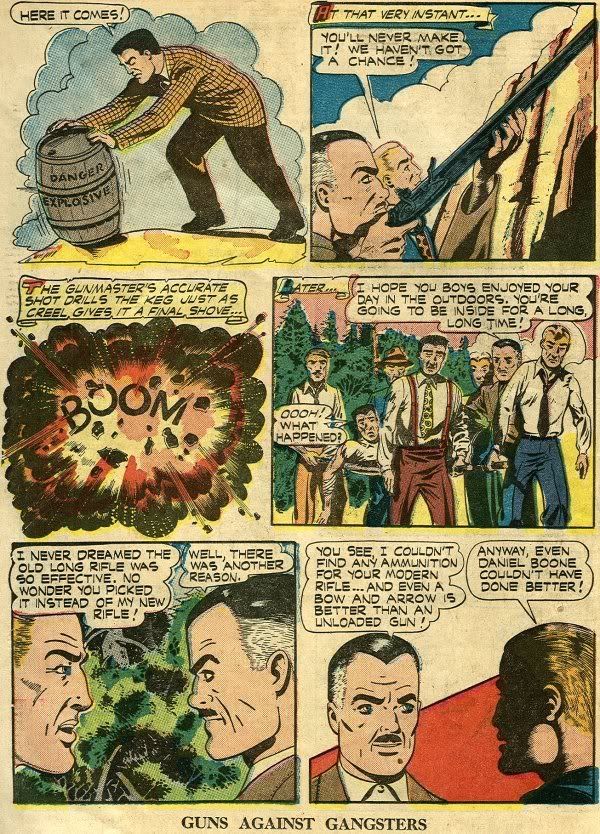
Gregory Gayle is Toni Gayle's dad. Who's Toni Gayle? She's the sexy chick with Bettie Pageboy hair who is the main character of Guns Against Gangsters. I showed her story from this issue, #6, July-August 1949, in Pappy's #22. Guns Against Gangsters, or GAG for short, is a crime comic book, but not like the type that we usually think of, the Charles Biro-edited books like Crime Does Not Pay, or Crime and Punishment. GAG had regular characters, and attempted to deflect the flood of criticism of crime comics that was following in the tidal wave of their success.

Gregory Gayle was kind of an early NRA spokesperson. He liked guns and was an expert as he shows in this story, taking out the crooks with an antique Kentucky long rifle. L. B. Cole, who drew the story, and maybe wrote it too, was reputedly an outdoor type of guy who liked fishing and hunting. There was probably some of L. B. in Gregory.

When you read the bottom of page 8, you see the line, "All comics are not alike. First read and compare them, then criticise." Some of the readers took them up on that. They could earn a buck for getting their letter published. This letter by a soldier shows both that GAG published critiques of itself, and also how the language and meanings have changed: "[The cover] should be more gay, with more action," read a lot differently 59 years ago than it does today.


Page 1 / Page 2 / Page 3 / Page 4 / Page 5 / Page 6 / Page 7 / Page 8 / Page 9


Number 303

2 x Everett


Karswell of The Horrors Of It All is showing Bill Everett stories the first week of May. I've chosen a couple by Everett from the Marvel reprint comics of the 1970s, a Venus pre-code story from Venus #18, 1952, and a postcode story from Astonishing #47, 1956. The thing that ties them together to me are the walking plants in Venus and the spacemen in Astonishing are both drawn in a cartoony style. More cartoony than Everett's usual style, which could get pretty cartoony.

*******